
 1 hour ago
14
1 hour ago
14
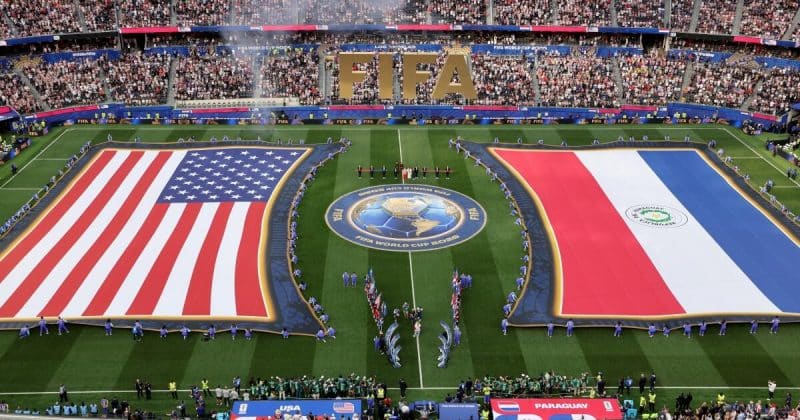
The defending World Cup champions are coming to the heartland. Argentina faces Algeria on June 16 at GEHA Field at Arrowhead Stadium in Kansas City, marking the city’s first-ever FIFA World Cup match and kicking off Group J in a tournament co-hosted by the US, Canada, and Mexico.
For Kansas City, this is a landmark moment. For crypto, it’s a carefully orchestrated coming-out party, with exchange giant Kraken serving as FIFA’s Official Crypto Exchange Supporter and a constellation of fan token platforms jockeying for attention alongside the world’s most-watched sporting event.
The match and the moment
Kickoff is scheduled for roughly 8 p.m. local time, or 01:00 UTC. Argentina, led by the gravitational pull of Lionel Messi’s global brand, is expected to draw a significant wave of international fans into a city more accustomed to hosting Chiefs games than World Cup atmospheres.
Algeria, for its part, brings a passionate traveling fanbase and a squad looking to make noise on the biggest stage. The Group J opener has all the ingredients for the kind of spectacle that tends to turn host cities into temporary cultural embassies.
Look, Kansas City wasn’t exactly on anyone’s shortlist of global football capitals before the bid was won. But Arrowhead Stadium holds more than 76,000 people, and the infrastructure around it has been designed for exactly this kind of mega-event. The city is about to find out what happens when international football fandom shows up in full force.
Crypto’s World Cup strategy takes shape
The more interesting story for digital asset investors isn’t on the pitch. It’s in the sponsorship deals, fan engagement platforms, and prediction markets that have turned the 2026 World Cup into crypto’s most ambitious mainstream integration to date.
Kraken was named FIFA’s Official Crypto Exchange Supporter on June 9, a designation that gives the exchange prominent branding throughout the tournament. The partnership is designed to weave crypto-driven fan experiences into match days, though the specifics of what that looks like on the ground remain to be seen.
Here’s the thing: crypto sponsorships in sports aren’t new. FTX slapped its name on an NBA arena before spectacularly imploding. Crypto.com bought naming rights to the former Staples Center. What’s different this time is the scope. The World Cup isn’t a league or an arena. It’s the single most-watched sporting event on earth, with cumulative viewership typically measured in the billions.
For Kraken, the calculus is straightforward. Every eyeball on a World Cup broadcast is a potential onboarding opportunity. Whether that translates to actual user growth is the multi-billion-dollar question the exchange is betting it can answer.
Meanwhile, Chiliz, the company behind the Socios.com fan token platform, has been expanding aggressively in anticipation of tournament-related demand. As of late April, the platform had expanded its fan-token ecosystem to both Solana and Base, hosting over 70 tokens linked to teams, leagues, and individual athletes.
Fan tokens tied to national teams and high-profile players like Messi are being highlighted during matches as engagement tools. In English: these are digital assets that give holders access to things like voting on minor team decisions, exclusive content, and other perks. They also trade on secondary markets, which means their prices can swing based on team performance, tournament results, and plain old speculation.
Prediction markets are getting in on the action too. Polymarket and Whale.io both have live markets for the 2026 World Cup, with Whale.io offering $90K in prizes tied to tournament outcomes. These platforms let users bet on match results, group stage outcomes, and tournament winners using crypto, effectively creating a parallel betting infrastructure that operates outside traditional sportsbook channels.
What this means for investors
The convergence of crypto and the World Cup creates a few dynamics worth watching.
First, trading volume on fan tokens tends to spike around major matches, particularly those involving high-profile teams. Argentina’s matches, given the Messi factor, are likely to generate outsized attention. If past tournaments are any guide, tokens associated with winning teams tend to see short-term price bumps, while losing teams’ tokens can drop quickly. It’s reactive, emotional trading, which is to say it’s exactly the kind of environment where retail participants can get burned if they’re not careful.
Second, the Kraken-FIFA partnership is a credibility play as much as a marketing one. Crypto exchanges have spent the past two years trying to rebuild trust after the FTX collapse and a punishing regulatory cycle. Landing a FIFA sponsorship signals that at least some traditional institutions are comfortable enough with the industry to attach their brand to it. That’s not nothing, even if it doesn’t directly move token prices.
Third, the expansion of Chiliz’s infrastructure to Solana and Base is technically significant. Moving fan tokens onto faster, cheaper chains lowers the friction for casual users who might pick up a token as a novelty during the World Cup but would never bother navigating Ethereum’s gas fees. Whether that translates to sustained engagement after the tournament ends is a different question entirely. Sports-adjacent crypto products have historically struggled with retention once the event-driven excitement fades.
The prediction market angle is perhaps the most structurally interesting. Platforms like Polymarket have already proven during the 2024 US presidential election that crypto-native prediction markets can generate real liquidity and surprisingly accurate forecasts. The World Cup offers a natural extension of that model, with dozens of matches and outcomes to bet on over several weeks. If these markets attract meaningful volume, it could accelerate the case for prediction markets as a legitimate financial product category rather than a niche crypto experiment.
The risk, as always, is that the hype cycle peaks during the tournament and evaporates afterward. Fan tokens in particular have a track record of spiking during major events and then slowly bleeding value in the months that follow. Investors treating these as anything other than short-term, event-driven trades should tread carefully and look at the post-2022 World Cup token performance as a sobering data point.
Disclosure: This article was edited by Editorial Team. For more information on how we create and review content, see our Editorial Policy.




 English (US) ·