
 3 months ago
91
3 months ago
91
- Morgan Stanley’s potential Bitcoin ETF could unlock up to $160 billion with just a 2% allocation
- The proposed MSBT fund follows the now-familiar spot ETF structure with major institutional partners
- Institutional adoption remains uneven, but momentum is clearly building toward deeper crypto exposure
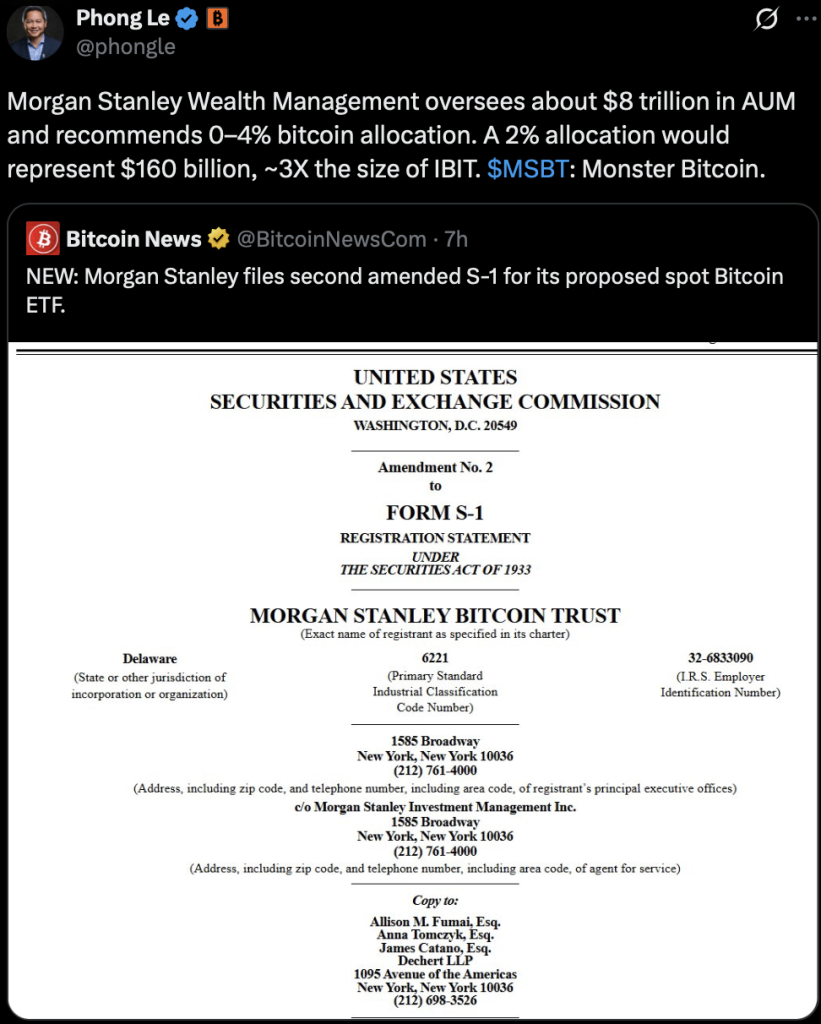
Morgan Stanley’s potential move into a Bitcoin ETF is starting to stir some serious conversation, and Phong Le, CEO of Strategy, didn’t hold back on the numbers. He pointed out that if even a small slice of Morgan Stanley’s massive $8 trillion in assets under management shifts into bitcoin, the impact could be… well, pretty huge. A simple 2% allocation, he noted on X, could translate to roughly $160 billion flowing into BTC, which is already several times larger than BlackRock’s IBIT fund today. Not exactly a minor shift, and maybe not something the market is fully pricing in yet.
A Small Allocation, A Massive Impact
What Le is really getting at is scale, and maybe something bigger than just one ETF. If wealth managers begin treating bitcoin as a standard portfolio piece rather than a fringe asset, the inflows could snowball fast, almost quietly at first, then all at once. Morgan Stanley itself has floated allocation ranges between 0% and 4%, depending on the client, risk appetite, and all that usual advisory nuance. But even sitting somewhere in the middle, say around that 2% mark, starts to reshape the landscape entirely. It’s not just adoption anymore, it’s acceleration, and maybe even normalization.
Inside the Proposed MSBT Bitcoin ETF Structure
At the same time, Morgan Stanley has been quietly moving forward with its own spot BTC ETF, filing updated documents with the SEC and revealing more of the structure behind the proposed fund, which would trade under the ticker MSBT. The setup isn’t particularly surprising, though still important. It mirrors what we’ve already seen with other spot ETFs: listing on NYSE Arca, standard creation units, and a relatively small initial seed. BNY Mellon is expected to handle the administrative side, while Coinbase would step in as both custodian and prime broker, which has become almost standard across these products, give or take.
Institutional Capital Slowly Leans Into Bitcoin
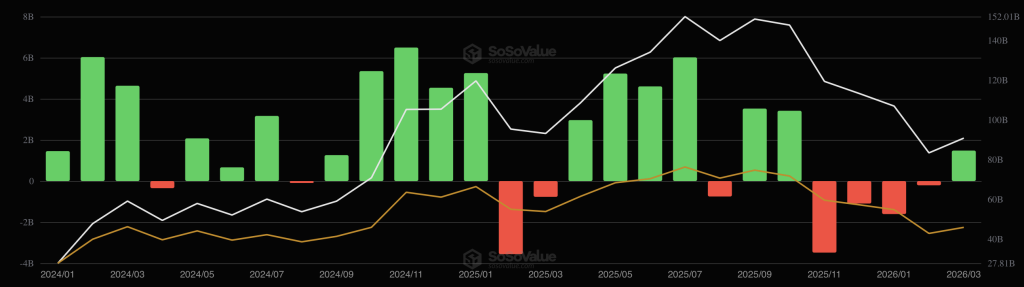
Still, the broader story here isn’t just about filings or tickers. It’s about how traditional capital is slowly, almost cautiously, leaning into bitcoin. Since spot ETFs launched in 2024, more than $50 billion has already flowed in, though much of that has come from individual investors rather than large advisory channels. That part remains uneven, shaped by internal policies, risk frameworks, and, honestly, hesitation. But Morgan Stanley’s move suggests something is shifting. Not just offering access anymore, but actually owning the product, which feels like a subtle but meaningful step.
What Happens If Approval Comes Through
Of course, nothing is guaranteed yet. The SEC hasn’t given a timeline, and approval is never a sure thing in this space. But even so, the signal is hard to ignore. A major U.S. bank that once approached bitcoin with caution is now positioning itself at the center of it. And if that $160 billion scenario even comes close to reality… things could get interesting, fast, maybe faster than most expect.
Disclaimer: BlockNews provides independent reporting on crypto, blockchain, and digital finance. All content is for informational purposes only and does not constitute financial advice. Readers should do their own research before making investment decisions. Some articles may use AI tools to assist in drafting, but every piece is reviewed and edited by our editorial team of experienced crypto writers and analysts before publication.









 English (US) ·