
 3 hours ago
18
3 hours ago
18
If you’re building or investing around sports apps this summer, you’re staring at a new baseline. Netflix quietly turned the World Cup into a living room game people can play in seconds. No downloads. No controllers. No wallet. That’s a serious UX statement.
This piece breaks down what Netflix just shipped, how it stacks up against blockchain-native sports apps, and what Web3 teams have to copy or rethink. We’ll get into fan tokens, exchange tie-ins, and where the friction still lives.
Short version: the bar for mainstream UX just moved. And it’s not moving back.
Netflix’s World Cup Launch Edition sets a mainstream UX benchmark because it collapses onboarding to nearly zero: included in the subscription, phone-as-controller, and play instantly on TV. Most blockchain sports apps still front-load friction with wallets, tokens, and compliance. To match it, Web3 apps need free-to-try play, invisible custody that’s exportable later, and rewards that work without forcing a token purchase on day one.
- Zero-cost access for members, instant start on a TV with your phone as the controller (Netflix Tudum).
- Netflix soft-launched in Brazil and Germany on June 4, full rollout June 11, 2026, supporting up to four players (Netflix Tudum).
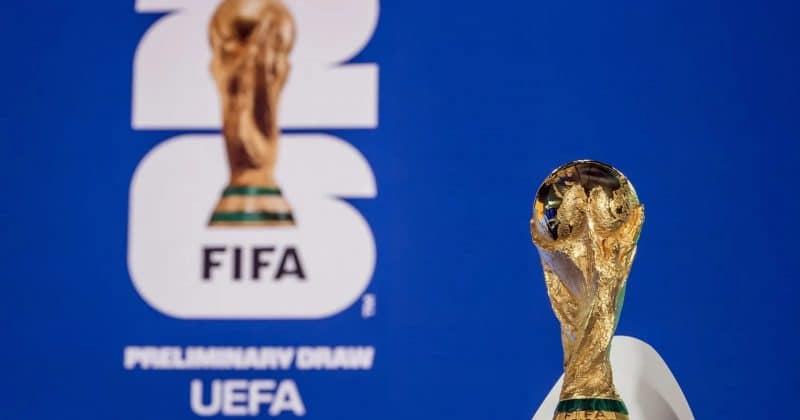
- FIFA named Kraken an Official Crypto Exchange Supporter for the 2026 World Cup, signaling broader crypto activations (FIFA).
- Fan token demand is live: Chiliz rolled out national-team tokens on Solana and CHZ rallied around the opening days (Chiliz; CryptoBriefing).
What did Netflix ship, and why does it matter for sports UX?
On June 11, 2026, Netflix released FIFA World Cup: Launch Edition, available to every Netflix member at no extra cost. It’s designed for the TV, with your smartphone acting as the controller, and supports up to four players. Netflix also ran a limited test in Brazil and Germany starting June 4 before rolling it out globally a week later. Those facts aren’t rumors; they came straight from Netflix’s own announcement (Netflix Tudum).
Why this matters: the experience hits living rooms with almost no friction. If you have Netflix, you already own the “platform,” you already have the log-in, and now you have a party game that’s contextually relevant to the biggest sports event of the year. It’s not “gamer” UX. It’s mainstream UX.
For Web3, that’s the line to clear. When you compare this to the usual “download app, create wallet, back up seed, bridge funds, pay gas” routine, you see where most blockchain experiences still stumble with casual fans.
How do blockchain sports apps onboard today, really?
There’s been a lot of progress since 2021, but for an average football fan, the path still bends uphill. Many token-centric apps push you to buy something before you even know if you enjoy the product. That means you either connect a wallet, set one up in-app (usually custodial), or go through an exchange for fiat onramps and KYC. Even when it’s “easy,” it still feels like banking paperwork compared to hitting Play on your TV.
Take fan tokens and prediction markets. Some Socios-style apps now let you sign up with email and defer self-custody. Great. But the moment rewards turn into withdrawals or trades, identity checks appear, along with fees and potential chain confusion. Meanwhile, Chiliz said it would bring gamified national-team Fan Tokens to the World Cup and launched four of them on Solana (ARG, POR, SAFA, SFA) tied to the tournament window (Chiliz). Solana is cheap and fast, which helps. Still, buying tokens is a different cognitive load than starting a party game.
There’s also the compliance layer. Depending on your country, token purchases can trigger different rules. Compare that to Netflix’s approach: one global brand, one subscription, and a game that sits inside your TV app. The gulf between “some paperwork” and “no paperwork” is the key UX difference.
What separates Netflix’s one-tap play from token-based engagement?
Let’s lay it out side by side. Not to crown a winner, just to be honest about the current state of play. Some Web3 apps are closing the gap, but this is what casual fans feel today.
Dimension Netflix World Cup Game Blockchain Sports Apps Onboarding time Seconds; already inside Netflix Minutes to hours if purchase/KYC is needed Account requirement Existing Netflix login Email + wallet (custodial or self-custody) + possible KYC Cost to start Included in membership Often requires a token or NFT buy-in, even if small Controller/inputs Smartphone as controller on TV Mobile app or web dApp; no standard “couch multiplayer” flow Latency/performance Local; near-instant Varies by chain and RPC; can stall during spikes Regulatory friction Content distribution rules Financial compliance, token rules, KYC/AML Ownership/resale Not the point; it’s a party game Core value: tradable items/tokens, but resale can add friction Rewards Entertainment value, bragging rights Perks, votes, raffles, earning mechanics Social graph Household multiplayer on TV In-app communities, Discord, sometimes fragmented Retention loops Event-based, content updates Stakes-based loops (prizes, trading), can be volatile
What’s interesting here is not that Web3 can’t do simple. It can. Many teams already offer email signups, one-tap wallets, and gas sponsorship. But the incentives often push people to trade before they play. That’s where the drop-offs happen.
Pro tip: If you must use tokens on day one, hide them. Let users play for free, accrue off-chain points, and only ask them to claim on-chain later. Bonus if they can export to self-custody with a single tap when they’re ready.
Is blockchain UX actually getting close in 2026?
Closer than it’s ever been. Wallet-as-a-service providers abstract keys behind passkeys or biometrics. Gas fees can be sponsored or paid in stablecoins. Session keys let you play a whole match without constant pop-ups. On Solana and modern EVM L2s, it’s technically feasible to keep signers and fees invisible until users care.
Plenty of consumer crypto apps now start with something like “Sign in with email,” create a custodial wallet under the hood, and keep everything off-chain until you want to trade. That looks and feels more like Netflix: low-friction first, deeper features later. Sorare pulled this off early with fantasy football. Socios-style apps are following similar arcs. The gap is narrowing.
But the roadblock is still the moment value moves. Fiat onramps and KYC are table stakes if you want broad market access. So while UX can feel Netflix-smooth during the free tier, the transition into money, even small amounts, is where Web3 still can’t fully match “press play.”
Where do fan tokens fit this World Cup?
Fan tokens are built for moments like this. Chiliz announced it would bring gamified national-team Fan Tokens to the World Cup, including four new ones on Solana tied to ARG, POR, SAFA, and SFA (Chiliz). That’s a smart move from a throughput and fee perspective.
Markets noticed. Reporting showed CHZ rallied roughly 28 percent during early tournament excitement in mid-June, highlighting how fast sentiment can lift fan-related tokens, at least temporarily (CryptoBriefing). It’s a classic event-driven pop. Useful for attention, risky for late buyers.
Fan tokens aren’t equity and don’t guarantee profits. They typically offer perks, votes, and access. If an app nails Netflix-like onboarding, fan tokens can become a background mechanic users barely notice at first. That’s where Web3 can win: tools for fandom, not tolls at the door.
Could exchanges make the handoff seamless?
There’s a new wrinkle. FIFA named Kraken the Official Crypto Exchange Supporter of the 2026 World Cup, with plans for fan activations around the tournament (FIFA). If exchanges show up inside stadiums and broadcast moments with polished onboarding, we might see genuine top-of-funnel traffic move into crypto apps without the usual friction.
In theory: scan a QR, sign in with an email or phone number, get a custodial wallet and a free collectible, claim later if you want. In practice: you still need compliant flows, safe custody, and clear paths to withdraw. If this part is bumpy, people bounce. If it’s crisp, Web3 suddenly feels normal.
The punchline is simple: exchanges can grease the rails, but the app still has to be fun. Netflix didn’t need a token to get a living room shouting at a TV. That’s the energy crypto apps need to capture first, then monetize later.
Promotional screenshot/art from Netflix’s FIFA World Cup: Launch Edition showing in-game UI and TV-focused presentation — visual evidence of Netflix’s TV+phone UX that targets mainstream, low-friction play. — Source: Netflix Tudum
What would a Web3 sports app need to match Netflix?
Here’s a practical checklist teams can tape to the wall this month. It’s not exhaustive, but it keeps you honest.
- Free-to-try, no wallet upfront: let anyone play a match in under 30 seconds.
- Phone-as-controller or dead-simple mobile inputs; couch multiplayer if you can swing it.
- Custodial-by-default with clear export to self-custody later. Keep private keys out of view at first.
- Gas sponsorship or fee-less starter tier; stablecoin billing only when needed.
- Local language support and light accounts (email/phone) before any financial steps.
- Rewards that don’t require a purchase; use off-chain points first, on-chain claims later.
- Seatbelt UX: daily caps, clear risk flags, and an always-visible “cash out” or export path.
- Compliant fiat ramps where the fan actually lives; plan for regional restrictions.
- Resilient infra: rate-limiters, queueing, fallbacks for RPC outages, and status pages.
Warning: Token-gating the first session is conversion poison. If your first screen mentions gas, NFTs, or seed phrases, expect most casual fans to vanish.
Common Mistakes
- Leading with a token sale. Fans came to play or connect with a team, not to learn market mechanics. Ship fun first; push ownership later.
- Forcing self-custody on day one. Offer export to a personal wallet, but start custodial. Keep the keys invisible until the user asks.
- Ignoring regional compliance. A smooth global UX can crumble at checkout if you lack local KYC/AML flows. Integrate multiple onramps and geolocation-aware disclosures.
- Charging gas at onboarding. Sponsor early transactions or run off-chain until users commit. No one wants to pay a network they don’t understand yet.
- Overcomplicating rewards. If a fan needs a glossary to claim a perk, it’s not a perk. Keep it points-first, claim-later.
- Fragile infrastructure. Sports traffic is spiky. Stress-test sign-in, wallet creation, and RPCs. Build toggles to degrade gracefully during peak minutes.
If you want more grounded takes like this during the tournament cycle, Crypto Daily tracks the Web3 side of major sports moments without the noise. Visit Crypto Daily.
Frequently Asked Questions
Is Netflix’s World Cup game on blockchain or issuing tokens?
No indication of that. The Launch Edition is a TV game included with Netflix memberships and uses your smartphone as the controller. There’s no public info suggesting any blockchain component (Netflix Tudum).
Do fan tokens act like stocks in national teams?
No. Fan tokens typically grant access, votes, or perks. They’re not equity and don’t pay dividends. Prices can be highly volatile around events, as seen with CHZ’s rally during the early World Cup window (CryptoBriefing).
Will exchange partnerships replace wallets entirely?
They can hide the complexity early on via custodial accounts, but wallets still exist under the hood. Good apps let you export to self-custody later without friction. Kraken’s World Cup role suggests more polished activations, but KYC will still appear when value moves (FIFA).
What’s the safest way to try a Web3 sports app during the tournament?
Start free, avoid connecting a high-value wallet, and don’t rush to buy tokens. If you do buy, use reputable onramps, enable 2FA, and understand withdrawal limits and fees. Never share seed phrases or approval signatures you don’t recognize.
Can minors use blockchain sports apps?
Many apps require age verification to purchase tokens or cash out. Local rules vary, and app store policies add another layer. Free, no-purchase gameplay is usually fine, but transfers and trades often gate by age and jurisdiction.
How do gas fees work if an app feels free?
Teams can sponsor transactions, batch them, or run actions off-chain until a claim. The result looks free to the user. Later, if you export items or trade, you’ll see fees, which vary by chain and network conditions.
Are World Cup fan tokens on Ethereum or something else?
It depends on the issuer. For the 2026 tournament, Chiliz said it launched four national-team tokens on Solana for throughput and cost advantages (Chiliz). Others may use EVM chains or separate sidechains.
Disclaimer: This article is provided for informational purposes only. It is not offered or intended to be used as legal, tax, investment, financial, or other advice.




 English (US) ·