
 2 months ago
31
2 months ago
31
- NFT market cap remains near lows with limited active collections
- Art-focused projects rise as PFP dominance fades
- Liquidity is concentrated, with few collections driving volume
There’s a noticeable shift in how people are talking about NFTs lately, and it’s not subtle if you’ve been paying attention. The tone has changed. Less hype, more realism, maybe even a bit of acceptance. The market hasn’t disappeared, it’s just been stripped down to what actually holds attention now.
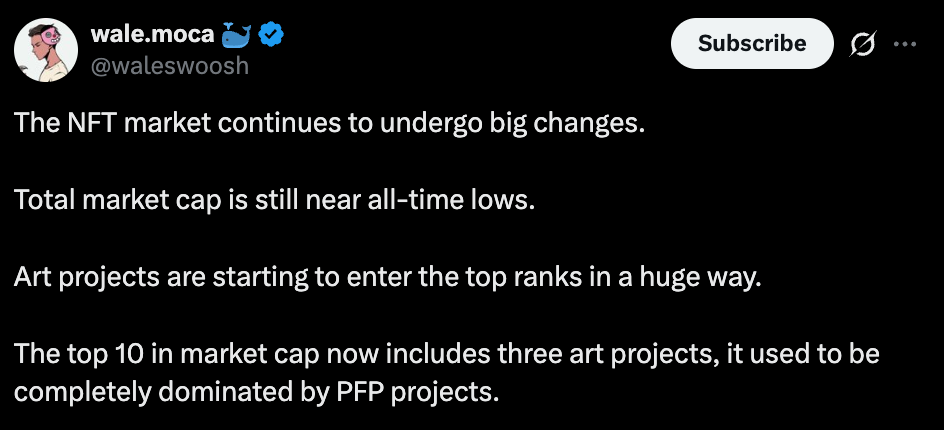
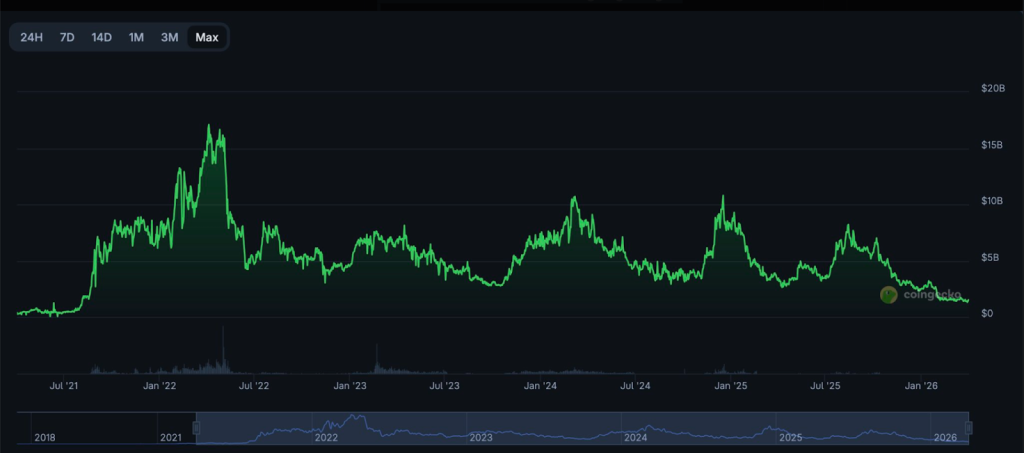
Total NFT market cap is still sitting near cycle lows, which says a lot about where things stand. The excess is gone, and what’s left feels smaller, tighter. You can see it clearly in liquidity, only a handful of collections are doing meaningful volume, while most sit quietly with almost no activity.
Liquidity Is Concentrated, Not Gone
One of the clearest signals is how narrow the market has become. Only around seven collections have managed to push past $1 million in 30-day volume. That’s not broad participation, that’s concentration.
It means capital isn’t flowing evenly across the space anymore. Instead, it’s funneling into a few select projects, leaving the majority behind. And in markets like this, attention becomes just as scarce as liquidity.
Art NFTs Are Quietly Gaining Ground
What’s more interesting is where that attention is going. Art-focused projects are starting to climb into the top rankings, something that used to be rare when profile picture collections dominated everything.
Now, outside of CryptoPunks, hardly any collection is even breaking the $100 million mark. That’s a sharp reset in valuation, but also a shift in taste. Buyers seem to be leaning toward cultural relevance and artistic value, rather than just brand familiarity or past hype.
Ethereum Reclaims NFT Dominance
Another trend that’s hard to ignore is Ethereum’s return to dominance. Most of the highest-value collections are back on ETH, with only a few exceptions elsewhere. The earlier push toward multi-chain NFTs spreading liquidity across ecosystems has, for now, faded into the background.
Capital seems to prefer consolidation over experimentation again. And when liquidity is already thin, that kind of concentration becomes even more pronounced.
OpenSea Finds Its Way Back
Then there’s OpenSea, quietly regaining control of around 59% of market share. After everything the platform has been through, that comeback feels a bit unexpected, but it also reflects the broader theme of consolidation.
When markets shrink, activity tends to cluster around familiar infrastructure. And right now, OpenSea is benefiting from that shift.
A Smaller, More Real NFT Market
The NFT market isn’t gone, it’s just no longer pretending to be bigger than it is. Liquidity is tighter, valuations are lower, and attention is harder to earn. That’s the reality.
The upside is that what’s left might actually be more sustainable. The downside is that most projects weren’t built for this version of the market, and that gap is starting to show.
Disclaimer: BlockNews provides independent reporting on crypto, blockchain, and digital finance. All content is for informational purposes only and does not constitute financial advice. Readers should do their own research before making investment decisions. Some articles may use AI tools to assist in drafting, but every piece is reviewed and edited by our editorial team of experienced crypto writers and analysts before publication.







 English (US) ·