
 12 minutes ago
3
12 minutes ago
3
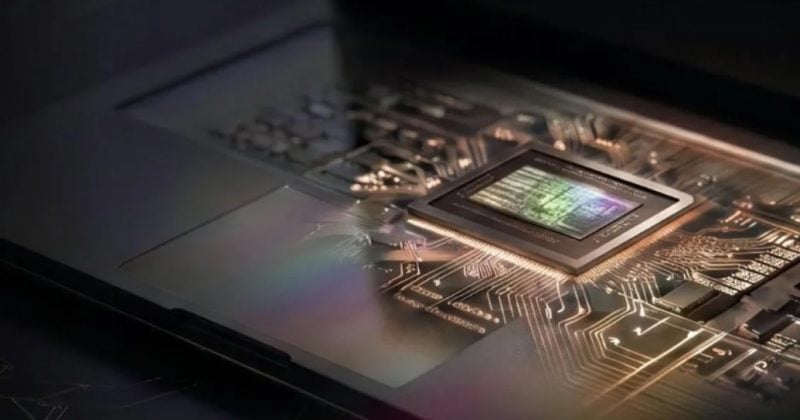
Nvidia just brought data-center-grade AI horsepower to your desk. The company’s new GB10 Grace Blackwell Superchip merges its Grace CPU with the Blackwell GPU architecture into a single Arm-based processor, delivering up to 1 petaFLOP of AI performance at FP4 precision while drawing roughly 280 watts of power.
In English: that’s enough computational muscle to fine-tune and run AI models with up to 200 billion parameters locally, no cloud subscription required. Systems built on the chip are expected to start around $4,000, a fraction of what equivalent data-center hardware would cost.
What’s under the hood
The GB10 Superchip pairs a 20-core Arm Grace CPU with Nvidia’s Blackwell GPU and 128GB of unified LPDDR5X memory. That unified memory pool is the key detail here. It means the CPU and GPU share the same high-bandwidth memory, eliminating the bottleneck that typically chokes AI workloads on traditional PC architectures.
Major PC manufacturers are already on board. Dell, Asus, HP, Acer, Gigabyte, Lenovo, and MSI are all building systems around the GB10 Superchip. Dell’s Pro Max and Asus’s Ascent GX10 are among the named configurations, spanning workstation and mini-desktop form factors running both Windows and Linux.
Initial partner systems are slated for July 2025, with hands-on reviews and broader availability expected into early 2026.
Why this matters beyond the spec sheet
The $4,000 price point positions these machines in a category that barely existed 18 months ago: the personal AI supercomputer. That’s substantially cheaper than assembling a multi-H100 setup, which could easily run into six figures, while still giving users access to Nvidia’s full AI software stack, including CUDA, cuDNN, and the broader ecosystem that developers have standardized around.
What this means for investors
For smaller businesses, independent AI researchers, and developers, the economics shift considerably. A $4,000 machine that can fine-tune a 200-billion-parameter model locally eliminates recurring cloud compute costs that can add up to thousands of dollars per month.
The partnership breadth, seven major OEMs at launch, suggests Nvidia is serious about volume. This isn’t a reference design that ships in limited quantities to enthusiasts. It’s a coordinated push across the PC industry’s biggest names, timed to arrive as Windows gains more native AI features.
Disclosure: This article was edited by Editorial Team. For more information on how we create and review content, see our Editorial Policy.







 English (US) ·