
 7 months ago
85
7 months ago
85
- Strategy says it will coordinate Bitcoin security research with global experts
- Saylor downplayed near-term quantum risk but acknowledged future upgrade needs
- Analysts warn parts of Bitcoin supply could already be vulnerable under ECDSA
Strategy plans to launch a Bitcoin security program aimed at addressing quantum computing risks and other future vulnerabilities, according to Executive Chairman Michael Saylor. Speaking during the company’s earnings call on Thursday, Saylor framed the initiative as a responsibility tied directly to Strategy’s position as the largest corporate Bitcoin holder. The message wasn’t that Bitcoin is broken, but that large holders should help prepare the ecosystem for what comes next.
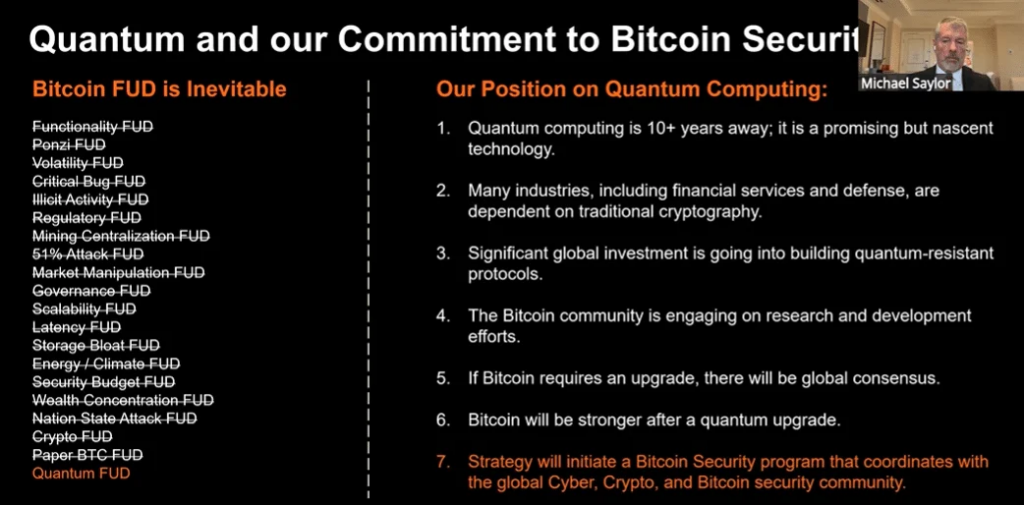
Saylor said the program will work with the global cybersecurity community, the broader crypto security community, and Bitcoin-specific security groups to coordinate research and responses. He emphasized that solutions should form through consensus rather than through rushed, isolated action, which is a subtle but important point in a system like Bitcoin.
Why Quantum Computing Is Even a Bitcoin Issue
The concern is rooted in Bitcoin’s cryptographic foundation. Bitcoin’s elliptic curve digital signature algorithm, ECDSA, is theoretically vulnerable to Shor’s Algorithm once quantum machines reach sufficient capability. That doesn’t mean Bitcoin can be cracked today, but it does mean the threat is structurally real, not imaginary.
Research estimates suggest roughly 25% of the Bitcoin supply could be considered vulnerable under certain conditions. These “at-risk” holdings are largely tied to early P2PK addresses and reused addresses where the public key has already been revealed on-chain. That doesn’t guarantee theft, but it does create a known exposure if quantum capabilities accelerate faster than expected.
Saylor Calls Quantum Fear the Latest Wave of FUD
Saylor acknowledged the risk, but he also dismissed the urgency that some market participants are pushing. He described quantum concerns as the latest in a long list of fears Bitcoin has survived, arguing that investors should not panic or rush into premature technical changes. In his view, rushed upgrades can introduce new vulnerabilities, which is sometimes worse than the original risk.

He argued that the consensus view is that meaningful quantum threats are still a decade or more away. He also pointed out that there is not yet global agreement that existing cryptographic libraries are at immediate risk. The emphasis here is timing, not denial.
Bitcoin Upgrades Are Possible, but They Require Coordination
Saylor repeatedly returned to one theme: if Bitcoin requires a quantum-resistant upgrade, it will happen through global consensus. That’s both reassuring and frustrating. Reassuring because Bitcoin can evolve. Frustrating because consensus takes time, and time is the exact thing quantum risk threatens.
The broader crypto ecosystem is already beginning to respond. Developer proposals like BIP 360 are early steps toward quantum-resistant features, though they are far from finished solutions. Some analysts warn that quantum-capable machines could arrive sooner, between 2027 and 2030, which is why these discussions are heating up now, even during a market downturn.
Disclaimer: BlockNews provides independent reporting on crypto, blockchain, and digital finance. All content is for informational purposes only and does not constitute financial advice. Readers should do their own research before making investment decisions. Some articles may use AI tools to assist in drafting, but every piece is reviewed and edited by our editorial team of experienced crypto writers and analysts before publication.








 English (US) ·