
 7 months ago
119
7 months ago
119
- Scott Bessent openly backed sweeping US crypto market structure legislation
- The tone signals a major shift in how Washington views digital assets
- Stablecoin yield fights remain the biggest obstacle to a real deal
Treasury Secretary Scott Bessent’s recent remarks on crypto legislation landed differently than the usual political chatter. When he said, “The digital asset revolution is here,” and expressed confidence that bipartisan leadership can get market structure legislation “across the finish line,” it wasn’t a throwaway line meant to grab a headline. It was a clear signal that one of the most powerful economic offices in the US is no longer treating crypto as a side issue.
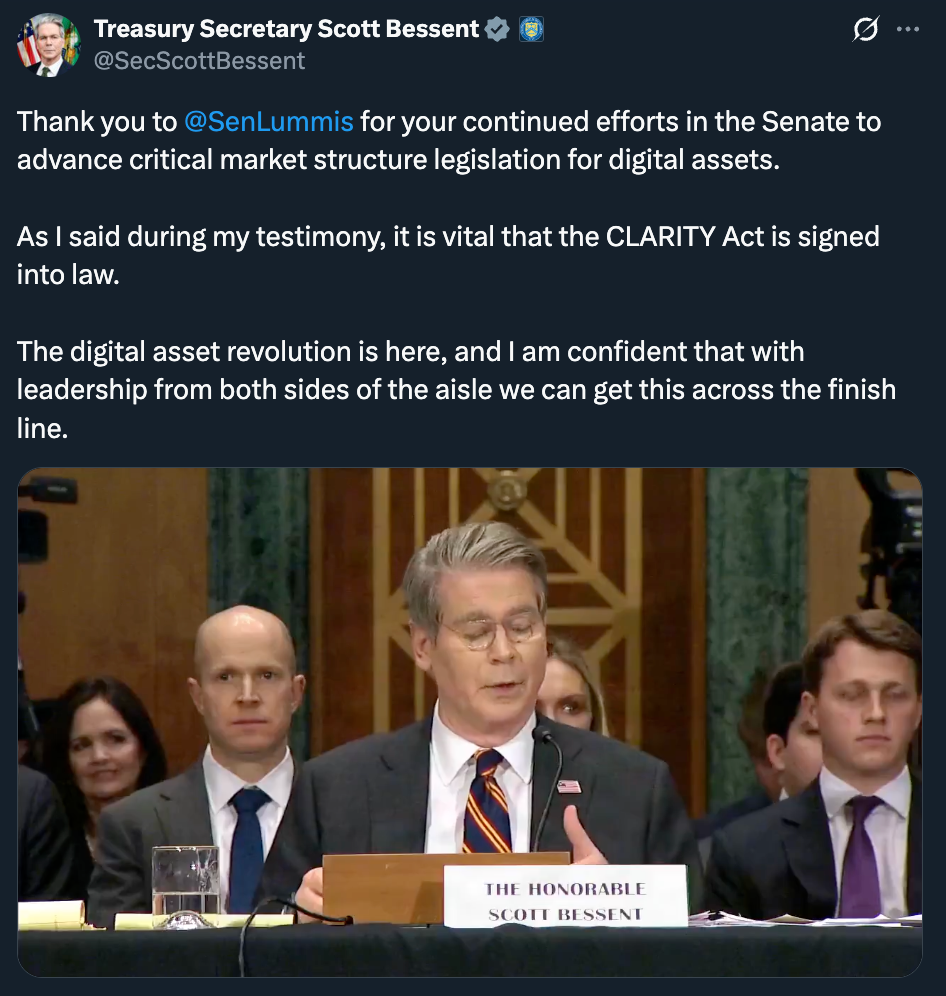
Timing matters too. Crypto has lived through years of regulatory ambiguity, enforcement-by-lawsuit, and constant uncertainty around who regulates what. For Treasury to speak this directly, and this optimistically, suggests something is shifting behind the scenes. Not just in tone, but in priorities.
The Real Target Is Market Structure, Not Another Patchwork Rule
What Bessent is referencing is the long-awaited federal digital asset market structure bill, the legislation meant to define clear roles for the SEC and CFTC, modernize oversight, and finally give crypto markets something close to a consistent rulebook. The industry has wanted this for years, mostly because it changes the entire risk profile of operating in the US.
Earlier drafts have already circulated through both the Senate and House, which hints at real bipartisan interest. Stablecoin regulation has moved faster, with the GENIUS Act already becoming law and setting a clearer framework for stablecoins. But market structure is the harder fight, because it touches everything, exchanges, tokens, custody, broker rules, and the basic plumbing of crypto trading.
The Stablecoin Yield Fight Is Still the Roadblock
Even with the new momentum, passage is not guaranteed. A recent White House-led meeting aimed at resolving disputes between banks and crypto firms, especially over stablecoin yield rules, ended without a breakthrough. That’s the real pressure point. Traditional finance worries that yield-bearing stablecoins could drain deposits from banks, while crypto firms argue yield is a natural feature of onchain finance, not a loophole.
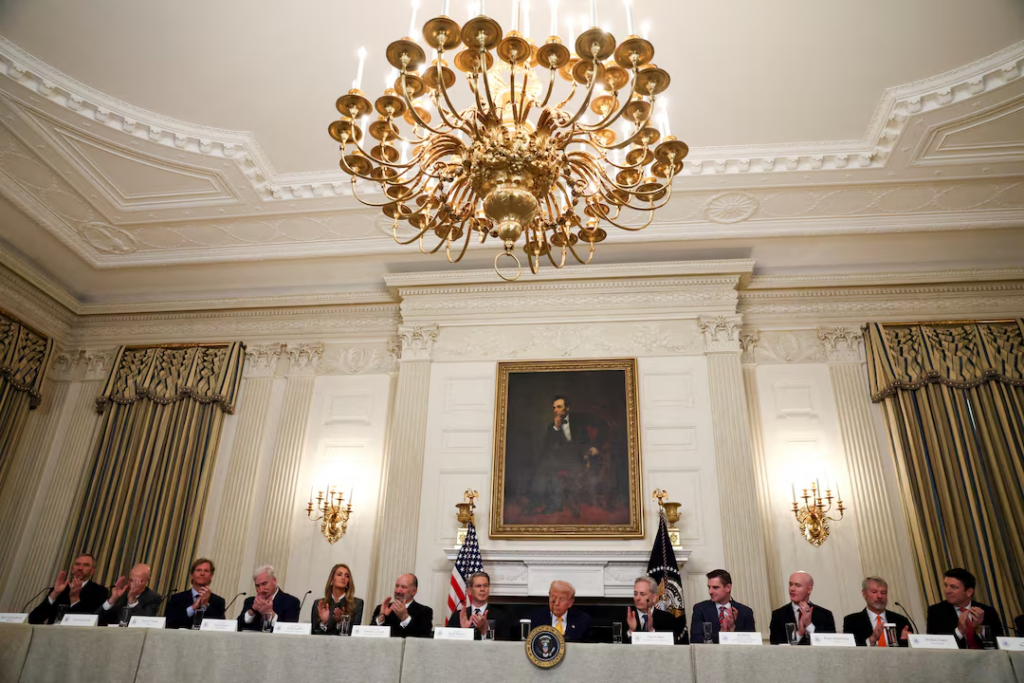
This isn’t a small technical disagreement. It’s a structural conflict over who gets to own the “dollar on the internet” business model. And that’s why the stalemate is so persistent, even with political support growing.
A Federal Shift That’s Bigger Than One Bill
Bessent’s stance reflects more than legislative optimism. It suggests the US government is increasingly viewing crypto as an opportunity, not just a risk. Bessent has framed digital assets as part of a broader vision where the US can lead in blockchain innovation instead of pushing the industry offshore.
His criticism of crypto “nihilists” who oppose regulation is also telling. Treasury doesn’t seem interested in a half-measure framework that leaves the market in limbo. The message is basically: if you want to operate in the US, rules are coming, and if you don’t want them, you can leave.
A Tipping Point, Not the Finish Line
Bessent’s remarks matter because they point to a coordinated federal push toward comprehensive crypto legislation, something the industry has lacked for more than a decade. But the downstream fights are still real, and stablecoin treatment remains the biggest unresolved issue. Getting “across the finish line” will require compromise, not just confidence.
The crypto revolution may indeed be here. The question is whether Washington can build the legal foundation fast enough to match the pace of what crypto is becoming.
Disclaimer: BlockNews provides independent reporting on crypto, blockchain, and digital finance. All content is for informational purposes only and does not constitute financial advice. Readers should do their own research before making investment decisions. Some articles may use AI tools to assist in drafting, but every piece is reviewed and edited by our editorial team of experienced crypto writers and analysts before publication.







 English (US) ·