
 1 month ago
56
1 month ago
56
- More than 200 crypto companies are pushing the U.S. Senate to advance the Digital Asset Market Clarity Act.
- Solana could benefit significantly if the legislation clarifies its regulatory status and shifts oversight away from the SEC.
- Investors believe regulatory certainty could unlock stronger adoption, ETF demand, and staking participation.
A growing coalition of crypto firms is ramping up pressure on lawmakers, urging the U.S. Senate to finally move forward with the Digital Asset Market Clarity Act. Earlier this month, more than 200 companies signed a letter addressed to Senate Majority Leader John Thune and Minority Leader Chuck Schumer, calling for a full Senate vote on the legislation.
For many in the industry, the bill represents something crypto has lacked for years: clear rules.
Supporters argue that the Clarity Act would establish a federal framework for digital assets, define the responsibilities of the SEC and CFTC more clearly, create workable registration pathways, and provide stronger protections for blockchain developers and software creators. If passed, the legislation could have a major impact across the sector, but few projects may benefit more than Solana.
Why Solana Stands Out
Solana has quietly become one of the most important blockchain networks in the industry.
Last year alone, the network supported more than 11,500 developers, making it the second-largest developer ecosystem behind Ethereum. At the same time, Solana has continued building a reputation for speed, scalability, and low transaction costs.
Its footprint in digital payments is also expanding.
Through partnerships involving companies such as Circle, Visa, PayPal, Stripe, and others, Solana now facilitates a substantial share of global stablecoin transfers. Beyond payments, the blockchain is becoming increasingly involved in the tokenization of real-world assets, one of the fastest-growing segments in crypto.
Yet despite those achievements, Solana has faced a challenge that technology alone could not solve.
Regulatory Uncertainty Has Weighed on SOL
For years, regulatory questions have hovered over Solana.
The SEC has repeatedly referenced SOL in enforcement actions and has previously argued that the asset should be treated as an unregistered security rather than a commodity. That classification created uncertainty among investors and institutions, making it harder for some participants to gain exposure to the network.
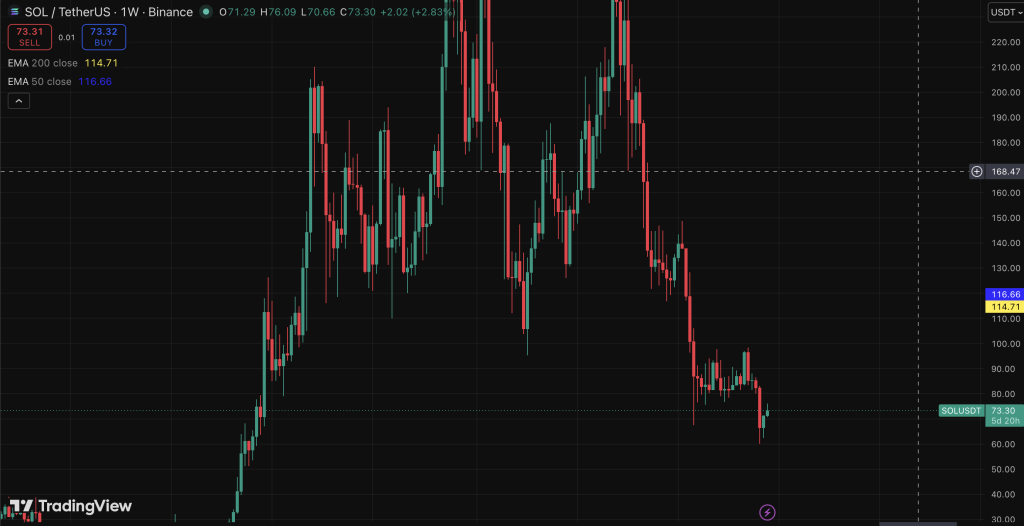
Combined with broader macroeconomic pressures, the regulatory overhang contributed to a sharp decline in sentiment. Over the past year, Solana’s price has fallen by more than 50%, despite continued growth across parts of its ecosystem.
Many investors believe the Clarity Act could help change that.
If the legislation passes with favorable language, mature decentralized networks like Solana could fall under CFTC oversight rather than SEC regulation. That shift would remove a significant cloud hanging over the project and could encourage capital to flow back into the ecosystem.
Solana ETFs Could Receive a Boost
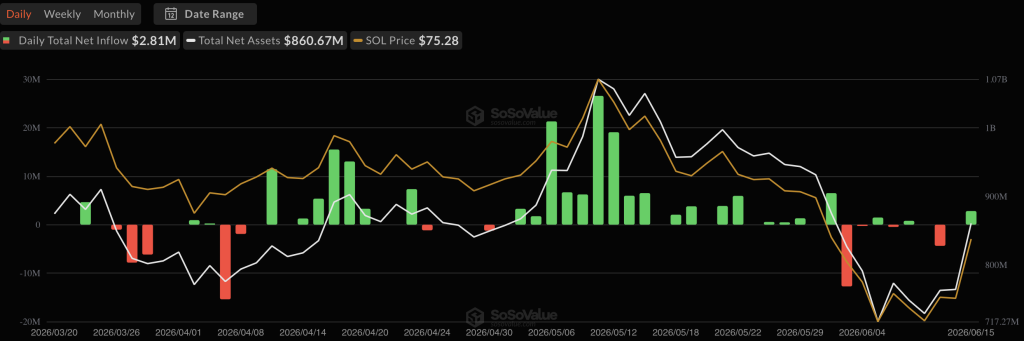
The timing is particularly important because Solana already has exchange-traded products available in the United States.
The first wave of U.S.-based Solana ETFs received approval in late 2025, giving investors a regulated pathway to gain exposure to the asset. However, regulatory uncertainty has limited enthusiasm among some institutional participants.
A clearer legal framework could change that equation.
If investors become more confident that Solana’s regulatory future is secure, ETF demand could increase alongside broader market participation. Historically, regulatory clarity has often acted as a catalyst for institutional adoption, especially in emerging asset classes.
And that isn’t the only area where Solana could benefit.
Staking May Attract New Investors
Like Ethereum and other proof-of-stake blockchains, Solana allows token holders to stake their assets and earn rewards.
For many investors, those yields represent an attractive source of passive income. However, staking has frequently been caught in regulatory debates, particularly as traditional financial institutions and regulators continue discussing its legal treatment.
Should the Clarity Act provide a more stable framework for staking services, yield-seeking investors may become more comfortable participating in networks such as Solana.
That could create another source of demand.
After all, regulatory clarity doesn’t just reduce risk. It often encourages participation from investors who were previously sitting on the sidelines.
Could This Be a Turning Point for Solana?
Solana’s biggest obstacle has rarely been its technology.
The network already ranks among the fastest blockchain platforms in operation. It continues attracting developers, expanding payment integrations, and growing its presence within tokenized asset markets.
The larger issue has been uncertainty.
Investors have struggled to assess the project’s long-term regulatory outlook as the SEC and CFTC maintained differing views on how digital assets should be classified. The Clarity Act aims to address exactly that problem.
If lawmakers ultimately pass the legislation and Solana receives the regulatory treatment many supporters expect, the network could find itself in a much stronger position heading into the next phase of crypto adoption.
For investors watching from the sidelines, that possibility is becoming increasingly difficult to ignore.
Disclaimer: BlockNews provides independent reporting on crypto, blockchain, and digital finance. All content is for informational purposes only and does not constitute financial advice. Readers should do their own research before making investment decisions. Some articles may use AI tools to assist in drafting, but every piece is reviewed and edited by our editorial team of experienced crypto writers and analysts before publication.








 English (US) ·