
 4 months ago
88
4 months ago
88
- Solana’s real-world asset sector grew from under $1.5 billion to more than $2.8 billion in 2026.
- Amundi reportedly launched a UCITS fund on Solana, strengthening institutional adoption narratives.
- SOL price retraced sharply after failing near resistance, triggering major long liquidations and heavy outflows.
Solana’s real-world asset sector keeps expanding at an impressive pace, even while the price of SOL struggles under renewed market pressure. Over the past several months, tokenized assets deployed on the network have surged sharply, reinforcing Solana’s growing position inside the broader blockchain-based financial infrastructure space. At the same time though, SOL itself has given back much of its recent rally after another failed breakout attempt near a key resistance zone.
Fresh data from Capital Markets showed that the total value of real-world assets on Solana climbed from under $1.5 billion in January 2026 to more than $2.8 billion this month. That kind of acceleration has pushed the network into one of the fastest-growing RWA ecosystems in crypto right now. If growth continues anywhere near the current pace, Solana could potentially cross the $3 billion mark within weeks, which honestly would have sounded pretty unrealistic not long ago.
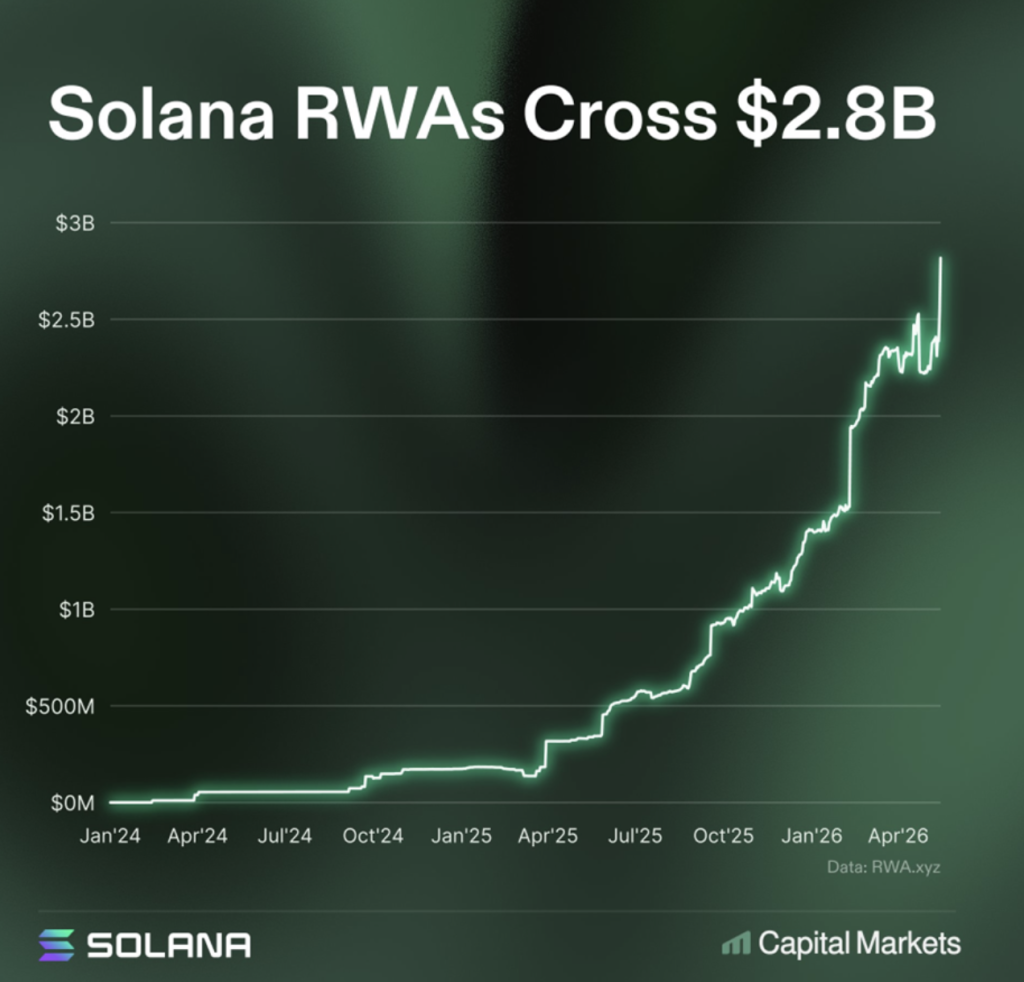
Real-World Asset Growth Keeps Accelerating on Solana
The growth isn’t only visible in asset value either. The number of RWA-related addresses on the Solana network has now reportedly surpassed 216,000, setting yet another milestone for adoption across the ecosystem. That surge suggests more institutions, developers, and users are beginning to interact with tokenized financial products directly on-chain rather than simply watching from the sidelines.
What makes the situation particularly interesting is how disconnected the network growth appears from SOL’s short-term price action. Normally, strong ecosystem expansion tends to support bullish momentum for a blockchain’s native token. In Solana’s case though, the market has remained caught between impressive long-term infrastructure growth and much weaker short-term trading conditions.
Still, the broader narrative surrounding Solana’s role in tokenized finance keeps strengthening.
Amundi Launches UCITS Fund on Solana Network
One of the biggest developments this week involved Amundi, Europe’s largest asset manager, which reportedly launched a UCITS fund on Solana. That’s a fairly major step because UCITS funds are standardized investment vehicles widely recognized and traded across the European Union. In traditional finance, these structures are viewed as highly regulated and institutionally accepted products.
The move highlights increasing interest in using Solana’s infrastructure for deploying traditional financial instruments directly onto blockchain rails. Institutional adoption has become one of the network’s biggest talking points lately, and developments like this only reinforce that trend further.
For many analysts, the growing RWA sector could eventually become one of Solana’s strongest long-term growth drivers, especially as traditional finance slowly moves deeper into tokenization. It’s still early, obviously, but momentum around blockchain-based financial infrastructure keeps building.
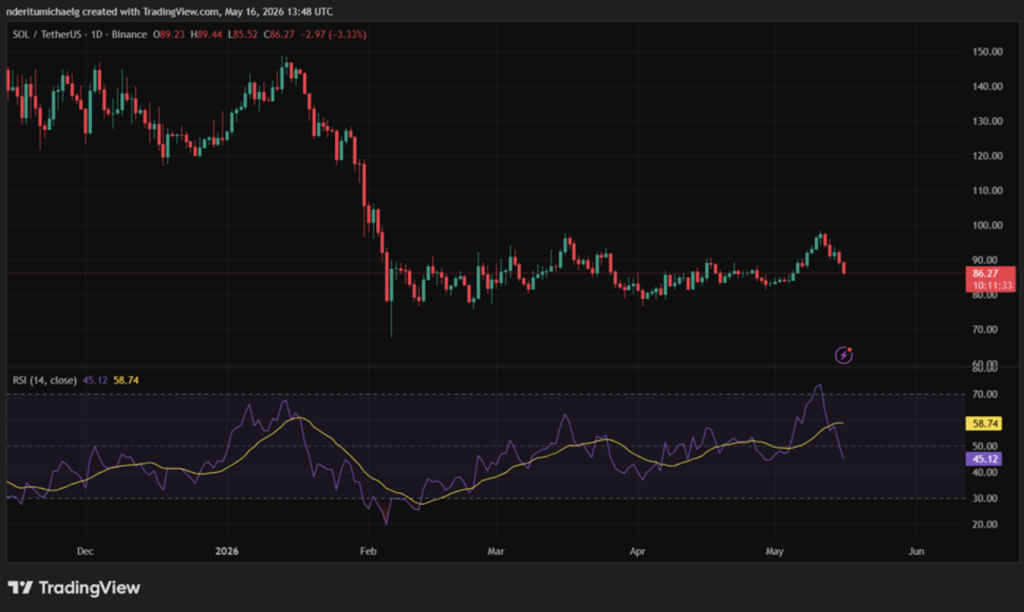
SOL Price Falls Back Into Consolidation Range
While ecosystem growth remains strong, SOL’s price action tells a much more cautious story in the short term. Earlier this month, optimism started returning after SOL rallied aggressively and briefly climbed above the important $98 level. That move sparked hopes that Solana might finally break free from the consolidation range it has traded within since February.
Instead, the rally stalled almost immediately after retesting major resistance. Since then, SOL has retraced roughly 12%, erasing most of the gains built during the first half of May. At the time of writing, Solana trades near $86, placing the token firmly back inside its broader consolidation zone once again.
For traders, that rejection mattered because many were waiting to see if the breakout had enough strength to sustain itself longer-term. Instead, the market rotated back toward defensive positioning pretty quickly.
Liquidations and Outflows Add More Pressure to SOL
On-chain data also showed increasing spot outflows throughout the week, especially after Monday’s market reversal. Over the past 24 hours alone, Solana reportedly experienced roughly $33 million in net outflows, signaling that investors were pulling capital rather than aggressively buying dips during the correction.
Meanwhile, derivatives markets had become increasingly leveraged before the reversal happened. Open interest surged from around $4.9 billion at the beginning of May to nearly $6.7 billion by May 12, reflecting heavy long positioning during the rally attempt. Once the market turned lower, that leverage quickly became fuel for additional downside pressure.
Long liquidations exploded over the last several days as a result. Roughly $25 million in long positions were liquidated during the past 24 hours compared to less than $500,000 in short liquidations during the same timeframe. That imbalance highlights how crowded bullish positioning had become before the retracement accelerated.
Even with the recent weakness, some investors still view SOL’s current price range as an attractive long-term accumulation zone, especially considering the network’s expanding real-world asset ecosystem. For now though, Solana continues dealing with short-term selling pressure while trying to balance growing institutional adoption against a much weaker trading environment.
Disclaimer: BlockNews provides independent reporting on crypto, blockchain, and digital finance. All content is for informational purposes only and does not constitute financial advice. Readers should do their own research before making investment decisions. Some articles may use AI tools to assist in drafting, but every piece is reviewed and edited by our editorial team of experienced crypto writers and analysts before publication.







 English (US) ·