
 1 month ago
53
1 month ago
53
- SpaceX plans to issue investment-grade debt just weeks after raising a record $85.7 billion through its IPO.
- The proceeds will primarily be used to reduce a $20 billion bridge loan linked to the xAI acquisition.
- Despite recent stock weakness, analysts remain divided on whether SpaceX’s valuation can support its ambitious growth plans.
Fresh off the largest initial public offering in history, SpaceX is already preparing to raise additional capital. The aerospace and technology giant announced plans to issue senior unsecured notes to qualified institutional investors, signaling a new phase in its post-IPO financing strategy.
The move comes less than two weeks after SpaceX raised $85.7 billion from its blockbuster public debut. While the company now sits on more than $100 billion in cash and cash equivalents, management appears focused on strengthening its balance sheet while funding a growing list of ambitious projects.
SpaceX Plans to Reduce Debt
According to company filings, proceeds from the debt offering will be used primarily to pay down a $20 billion bridge loan. That loan represents the majority of SpaceX’s roughly $29 billion debt load and was used to help finance obligations related to xAI, Elon Musk‘s artificial intelligence venture that was acquired by SpaceX earlier this year.
The planned bond issuance received a boost after Moody’s, Fitch, and S&P Global all assigned investment-grade ratings to the company. Securing those ratings allows SpaceX to access debt markets on more favorable terms and attract institutional investors seeking relatively lower-risk corporate bonds.
The strategy mirrors financing approaches previously used by Tesla, another Musk-led company that frequently balanced equity and debt markets to support growth.
Massive Expansion Plans Require Capital
Although SpaceX’s IPO generated an unprecedented cash windfall, the company continues pursuing several capital-intensive projects that could consume substantial resources over the coming years.
Among its biggest initiatives are the ongoing development of Starship, the expansion of Starlink’s satellite infrastructure, AI-related projects, and plans for space-based data centers. The company is also investing heavily in advanced semiconductor manufacturing through its Texas-based Terafab facility.
These projects require enormous amounts of capital, making additional fundraising unsurprising despite the company’s massive cash reserves.
SpaceX Stock Pulls Back After Initial Surge
Following a powerful rally after its market debut, SpaceX shares have recently cooled off. The stock fell roughly 10% during Monday trading and was on track for its third consecutive daily decline.
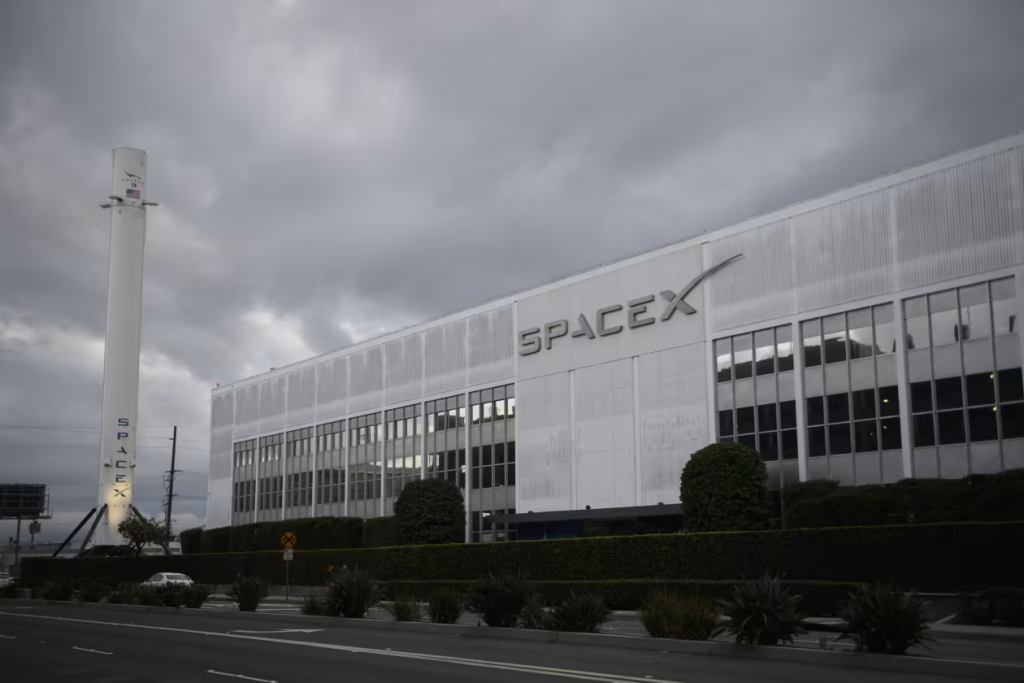
Even after the pullback, however, shares remain well above the IPO price of $135 and continue to trade at levels reflecting significant investor optimism about the company’s future.
The recent weakness highlights a broader debate developing on Wall Street regarding whether SpaceX‘s current valuation accurately reflects its long-term potential.
Analysts Remain Split on Valuation
Early analyst reactions have been mixed. Some firms remain highly optimistic, pointing to SpaceX’s dominant position in rocket launches, satellite communications, artificial intelligence, and emerging space technologies.
Research firm Zephirin initiated coverage with a buy rating and a $310 price target, implying substantial upside from current levels. Oppenheimer has also expressed confidence in the company’s growth prospects with a target of $250 per share.
Others are more cautious. KeyBanc recently launched coverage with a neutral sector-weight rating, arguing that much of SpaceX’s future success may already be reflected in its valuation. Analysts noted that the stock trades at premium multiples compared to many industry peers.
What It Means for Investors
The decision to raise debt shortly after a record-breaking IPO sends a clear message about SpaceX’s ambitions. Rather than conserving capital, the company appears focused on accelerating growth while improving its financial flexibility.
For investors, the key question is whether SpaceX can execute on its long-term vision quickly enough to justify its premium valuation. Supporters believe the company is uniquely positioned to dominate multiple trillion-dollar industries, while skeptics continue questioning the timelines associated with many of its projects.
Regardless of which side proves correct, one thing is clear: SpaceX is not slowing down. Between aggressive expansion plans, continued fundraising, and Elon Musk’s broader technology ecosystem, the company remains one of the most closely watched growth stories in both traditional markets and the emerging intersection of AI, space, and technology.
Disclaimer: BlockNews provides independent reporting on crypto, blockchain, and digital finance. All content is for informational purposes only and does not constitute financial advice. Readers should do their own research before making investment decisions. Some articles may use AI tools to assist in drafting, but every piece is reviewed and edited by our editorial team of experienced crypto writers and analysts before publication.








 English (US) ·