
 2 months ago
66
2 months ago
66
- Stablecoin velocity doubles, signaling real-world usage growth
- Payments, TradFi, and AI transactions drive new demand
- Faster turnover may reshape supply expectations despite bullish outlook
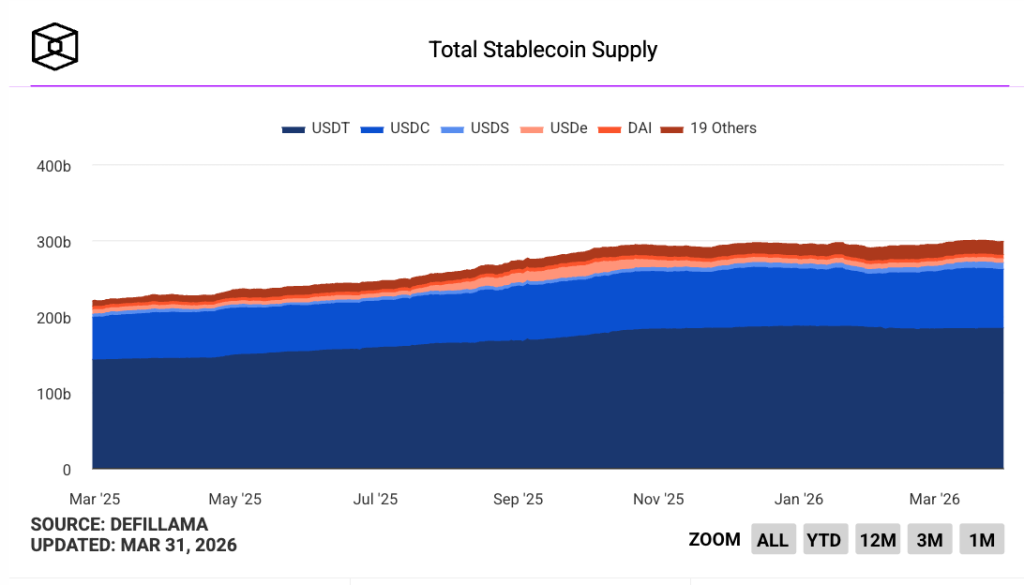
Stablecoins are starting to behave differently, and it’s subtle enough that most people might miss it at first. For years, the assumption was simple, more adoption means more supply. But that relationship is beginning to shift. Recent data shows stablecoins are now moving through the system about six times per month on average, roughly double the pace seen just a couple of years ago.

That changes the equation. If each dollar is being used more frequently, you don’t necessarily need as many new dollars entering the system to support growth. It’s not just about how much exists anymore, it’s about how efficiently it’s being used.
Usage Is Expanding Beyond Trading
What’s driving this shift isn’t another speculative cycle. It’s usage. Stablecoins are increasingly being used for payments, settlements, and cross-border transfers, areas traditionally dominated by banking infrastructure. That’s a different kind of demand, one tied to utility rather than trading volume.
There’s also a newer layer emerging, AI-driven transactions. Machines interacting with each other don’t wait for banking hours or settlement delays. They need something instant and programmable, and stablecoins fit that model almost perfectly. It’s early, but the direction is clear.
Velocity Changes the Demand Curve
Higher velocity introduces a new dynamic. When assets move faster, the same supply can support more activity. That means growth doesn’t always require expansion in circulating supply at the same pace as before.
This doesn’t make stablecoins less important, if anything, it makes them more efficient. But it does challenge how people think about future projections. Supply alone no longer tells the full story.
Why Long-Term Growth Still Holds
Despite this shift, bullish forecasts haven’t disappeared. Projections calling for stablecoin supply to reach $2 trillion still stand, and they’re not necessarily wrong. The key detail is that different use cases behave differently.
Some stablecoins will sit idle in savings-like roles, requiring larger balances. Others will move rapidly through payment systems and transactional flows. Both can grow at the same time, just with different velocity profiles.
A Shift From Supply to Speed
What’s happening here feels like a transition. Stablecoins are moving from being seen primarily as liquidity pools to becoming active financial infrastructure. And infrastructure isn’t measured just by size, but by throughput.
If this trend continues, the focus will shift. Instead of asking how many stablecoins exist, the more important question becomes how fast they’re moving, and what they’re being used for.
The Next Phase of Stablecoins
This isn’t a dramatic change, but it’s an important one. Stablecoins aren’t just growing, they’re evolving. And that evolution is being driven by real usage, not just speculation.
If velocity keeps rising, the next phase of growth won’t be defined by supply alone. It’ll be defined by how deeply stablecoins are embedded into the systems that move money, quietly, but at scale.
Disclaimer: BlockNews provides independent reporting on crypto, blockchain, and digital finance. All content is for informational purposes only and does not constitute financial advice. Readers should do their own research before making investment decisions. Some articles may use AI tools to assist in drafting, but every piece is reviewed and edited by our editorial team of experienced crypto writers and analysts before publication.








 English (US) ·