
 2 months ago
88
2 months ago
88
- Strategy and BitMine continued accumulating Bitcoin and Ethereum despite steep declines in their own share prices.
- Analysts say shrinking valuation premiums are making crypto treasury companies less attractive than they were during the bull market.
- While treasury firms remain bullish on digital assets, many investors may benefit more from owning crypto directly or through spot ETFs.
Crypto treasury companies aren’t backing down.
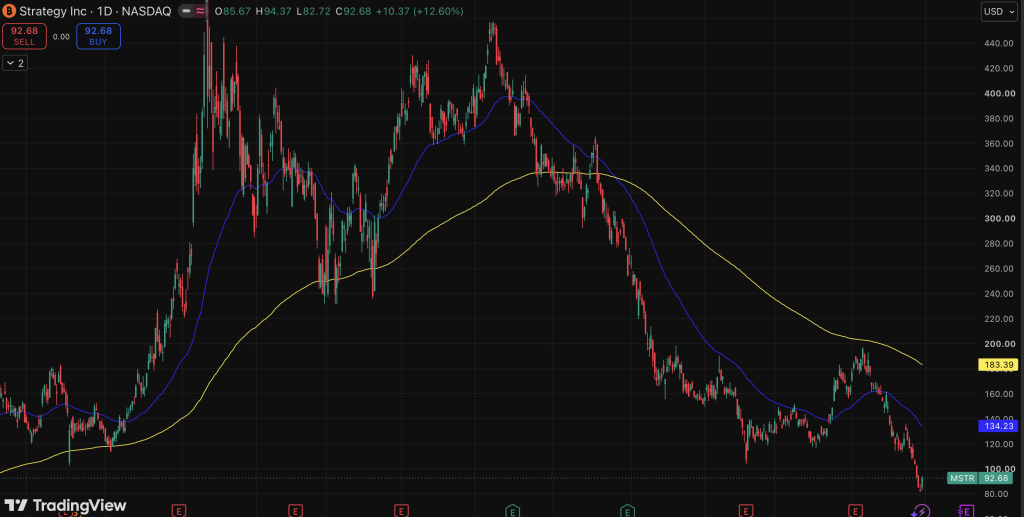
Even after months of falling share prices and weaker market conditions, some of the biggest corporate buyers of digital assets continue adding aggressively to their holdings. During the week of June 14, Strategy purchased another 520 Bitcoin for roughly $35 million, bringing its total stash to an enormous 847,363 BTC.
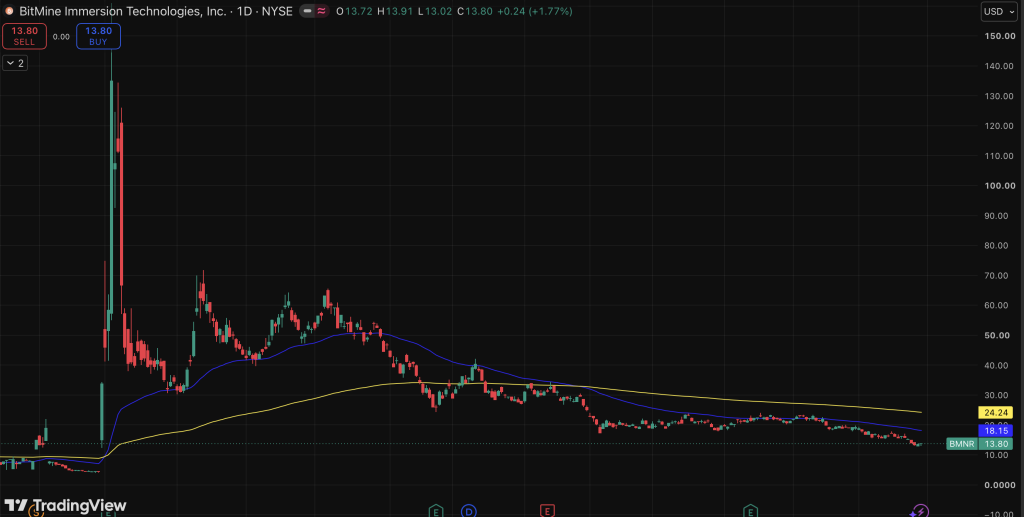
BitMine Immersion Technologies followed a similar path, acquiring 52,203 Ethereum worth approximately $92 million.
The message from both companies hasn’t changed much. They believe today’s prices represent an opportunity rather than a warning, and they’re betting that long-term appreciation will outweigh today’s short-term pain.
The bigger question, however, isn’t whether these companies should keep buying.
It’s whether investors should be buying their stocks instead of simply owning the cryptocurrencies themselves.
The Premium That Powered Treasury Stocks Is Fading
The business model behind digital-asset treasury companies depends heavily on one important metric: market value to net asset value, commonly known as mNAV.
When a company’s shares trade above the value of the crypto it owns, management can issue additional stock at a premium and use the proceeds to buy even more digital assets. If done successfully, the process creates a self-reinforcing cycle that benefits both the balance sheet and shareholders.
But that advantage disappears once the premium fades.
If a treasury company’s stock falls below the value of its underlying assets, issuing new shares becomes far less attractive. Instead of strengthening shareholders’ positions, additional stock sales can dilute existing investors without generating the same level of value.
That’s the challenge several companies now face.
Strategy currently trades at an estimated 0.63 mNAV after Bitcoin entered a prolonged bear market. Its stock has fallen roughly 43% so far this year.
BitMine is holding up slightly better with an mNAV near 0.97, although its shares have still declined around 51% over the same period.
One notable exception has been Hyperliquid Strategies, which continues trading well above its asset value with an estimated mNAV of 1.86. Its stock has climbed close to 98% over the past year, making it one of the few standout performers in the sector.
Bitcoin and Ethereum Offer Different Investment Dynamics
While both Strategy and BitMine continue buying aggressively, the assets they’re accumulating behave very differently over the long run.
Bitcoin’s supply is permanently capped at 21 million coins. Strategy now controls roughly 4% of all Bitcoin that will ever exist, a figure that continues growing with each purchase.
As more Bitcoin is removed from the circulating supply, scarcity naturally increases. That dynamic can benefit Bitcoin holders over time, although Strategy shareholders must also absorb share dilution and the company’s financing costs.
Ethereum works differently.
Unlike Bitcoin, Ethereum does not have a fixed maximum supply. Although portions of ETH are regularly burned through network activity, issuance can still exceed those burns during certain periods, making supply mildly inflationary.
BitMine currently owns roughly 4.7% of Ethereum’s circulating supply, but that ownership does not tighten market supply to the same extent that Strategy’s Bitcoin accumulation does.
The result is a different investment profile, even if both companies follow similar treasury strategies.
Direct Crypto Exposure May Offer Better Value
For investors seeking exposure to Bitcoin or Ethereum, treasury companies are no longer the only option.
Spot Bitcoin and Ethereum ETFs now provide direct exposure to the underlying assets while charging relatively modest annual management fees, typically between 0.2% and 0.3%.
Buying the cryptocurrency itself is another alternative that avoids corporate expenses altogether.
Treasury companies, on the other hand, bundle cryptocurrency ownership with a number of additional risks. Investors aren’t just buying Bitcoin or Ethereum. They’re also taking on corporate operating costs, debt obligations, potential share dilution, and management decisions that may or may not create additional value over time.
Those extra layers can increase volatility without necessarily improving long-term returns.
Treasury Stocks Carry More Than Crypto Risk
Owning shares of a digital-asset treasury company introduces risks that don’t exist when holding the underlying cryptocurrency.
Management has discretion over future financing decisions, including issuing additional shares that could dilute existing investors. Companies may also borrow money to fund purchases, creating leverage that amplifies both gains and losses.
Governance risk becomes another factor. Investors must place confidence not only in the long-term prospects of Bitcoin or Ethereum but also in the executives running the treasury company itself.
That doesn’t mean treasury stocks have no place in a portfolio.
In certain situations, particularly when ETFs aren’t available for a specific digital asset, they can offer useful exposure. But as regulated crypto investment products become more widely accessible, the advantages once enjoyed by treasury companies are becoming less obvious.
For many investors, direct ownership of Bitcoin or Ethereum, or gaining exposure through low-cost spot ETFs, may now represent a simpler and potentially less risky way to participate in the long-term growth of digital assets.
Disclaimer: BlockNews provides independent reporting on crypto, blockchain, and digital finance. All content is for informational purposes only and does not constitute financial advice. Readers should do their own research before making investment decisions. Some articles may use AI tools to assist in drafting, but every piece is reviewed and edited by our editorial team of experienced crypto writers and analysts before publication.








 English (US) ·