
 2 months ago
99
2 months ago
99
- Ukraine has transferred more than $8.3 million in seized USDT into state management for the first time.
- The assets are being held by the country’s asset recovery agency while criminal proceedings continue.
- The move comes as Ukraine explores creating a national crypto reserve using confiscated digital assets.
Ukraine has officially transferred seized cryptocurrency into state management for the first time, marking a significant milestone in the country’s approach to digital assets. According to the Prosecutor General’s Office, more than $8.3 million worth of USDT has been placed under the control of the National Agency for Finding, Tracing and Management of Assets (ARMA), the government body responsible for managing property seized in criminal investigations.
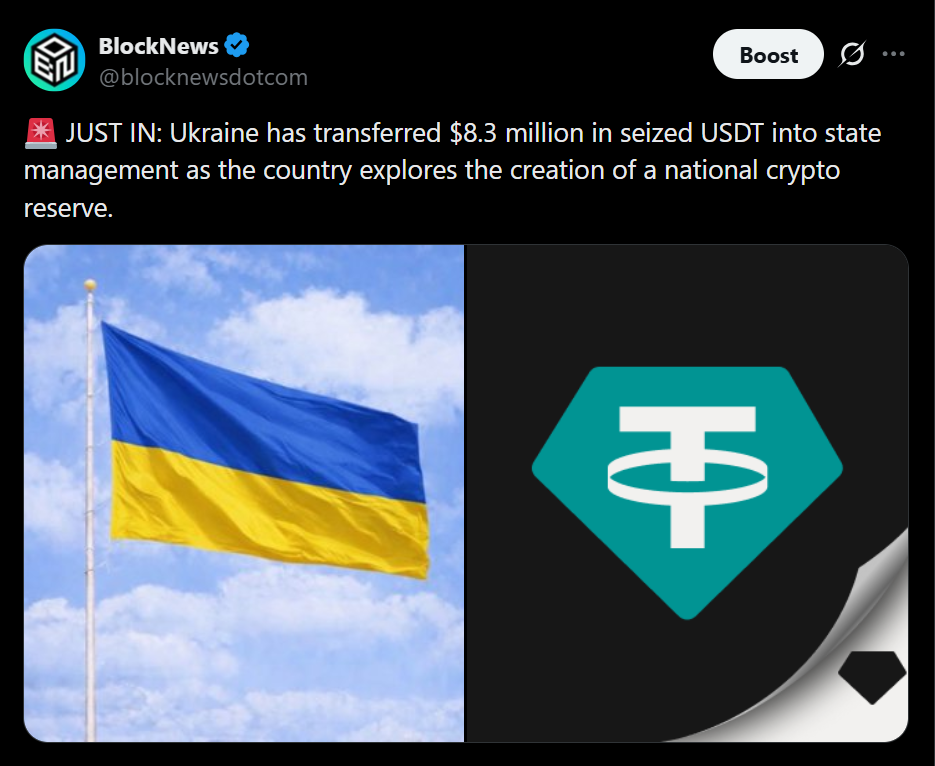
The development comes as Ukraine continues evaluating the creation of a national cryptocurrency reserve, highlighting the growing role digital assets could play in government financial strategies.
First Crypto Assets Enter State Management
The transfer was carried out under a court order following an investigation led by Ukraine’s State Bureau of Investigation. Authorities moved approximately $8.3 million in USDT—equal to about 372 million Ukrainian hryvnias—into a wallet controlled by ARMA.
Officials described the move as the first time seized cryptocurrency has formally entered state management in Ukraine. While ARMA has long overseen confiscated assets such as real estate, vehicles, and cash, this is its first experience managing digital assets on behalf of the government.
Importantly, the transfer does not mean the government now owns the funds. The cryptocurrency remains under state custody while legal proceedings continue, and ownership can only be permanently transferred following a criminal conviction.
Crypto Linked to Alleged Hacker Group
According to prosecutors, the seized USDT originated from wallets allegedly controlled by a member of an international cybercrime organization.
Investigators accuse the group of conducting cyberattacks against businesses and individuals across Europe and the United States, stealing sensitive data, demanding ransom payments, and laundering proceeds through Ukrainian real estate, vehicles, and other high-value assets.

Authorities have detained four suspects, including the alleged organizer, although none have yet been convicted. Investigators estimate the group’s criminal activities caused more than $100 million in damages.
In total, law enforcement has seized more than $11.1 million worth of assets during the investigation, including homes, apartments, vehicles, approximately $1 million in cash, and over $8.3 million in digital assets.
Ukraine Eyes a National Crypto Reserve
The transfer also arrives as Ukraine explores establishing a national cryptocurrency reserve.
Rather than purchasing digital assets directly on the open market, policymakers are evaluating whether confiscated cryptocurrencies could form the foundation of a government reserve. The concept mirrors a similar approach adopted in the United States, where a presidential executive order outlined plans for a strategic Bitcoin reserve funded through criminal and civil asset forfeitures.
Ukraine has become one of Europe’s largest cryptocurrency markets. According to Chainalysis, the country ranked fourth in Europe for cryptocurrency transaction volume, receiving approximately $206.3 billion in digital assets between mid-2024 and mid-2025.
Governments Continue Expanding Their Crypto Strategies
The latest move highlights how governments are increasingly treating cryptocurrencies as legitimate financial assets requiring formal legal and custodial frameworks.
While Ukraine’s seized USDT remains subject to ongoing court proceedings, the transfer demonstrates growing institutional readiness to manage digital assets alongside traditional seized property.
As more countries develop policies surrounding confiscated cryptocurrencies and strategic digital asset reserves, Ukraine’s decision could become another example of how governments are integrating blockchain assets into their financial and legal systems.
Disclaimer: BlockNews provides independent reporting on crypto, blockchain, and digital finance. All content is for informational purposes only and does not constitute financial advice. Readers should do their own research before making investment decisions. Some articles may use AI tools to assist in drafting, but every piece is reviewed and edited by our editorial team of experienced crypto writers and analysts before publication.







 English (US) ·