
 2 hours ago
15
2 hours ago
15
- Spot Bitcoin ETF outflows have already surpassed February’s record before the month has even ended.
- Bitcoin has fallen nearly 8% over the past week, slipping below the $60,000 level.
- Despite widespread market weakness, Solana has outperformed while the Crypto Fear & Greed Index remains in Extreme Fear.
Bitcoin continues to face heavy selling pressure as institutional money flows out of spot Bitcoin ETFs at a record pace. The world’s largest cryptocurrency slipped from above $60,000 to around $59,000 on Monday, extending its weekly decline to nearly 8% as investors remain cautious amid deteriorating market sentiment.
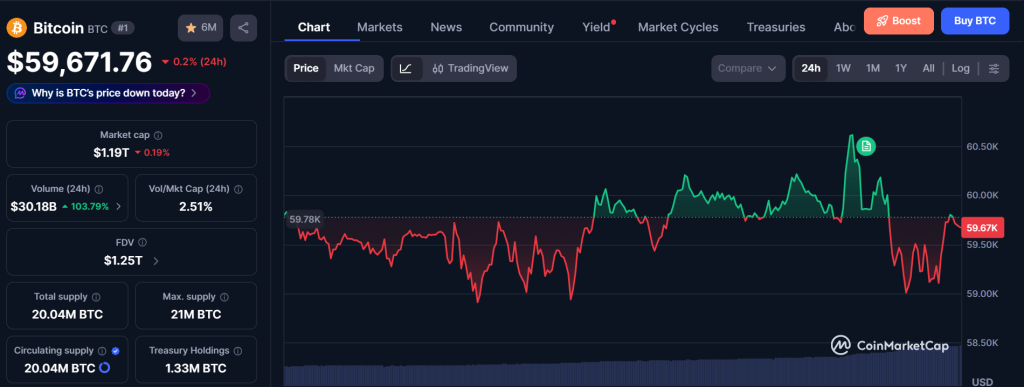
While Bitcoin’s price decline has attracted attention, many analysts believe the more important story is unfolding behind the scenes. Record ETF outflows suggest institutional demand has weakened considerably, creating one of the largest headwinds the crypto market has faced this year.
Bitcoin ETF Outflows Reach New Record
June has already become the worst month on record for U.S. spot Bitcoin ETFs in terms of net outflows, surpassing the previous record set in February 2025 with more than $3.6 billion exiting the funds before the month has even concluded.
The sustained withdrawals indicate that institutional investors are reducing exposure rather than accumulating Bitcoin at current prices.
When spot Bitcoin ETFs launched, many investors expected institutional demand to create a long-term floor beneath Bitcoin’s price. The latest outflow trend serves as a reminder that institutions can become sellers just as quickly as they become buyers when market conditions deteriorate.
Unless new demand offsets those withdrawals, ETF redemptions could continue weighing on Bitcoin in the near term.
Fear Reaches Extreme Levels
Investor sentiment has also weakened significantly. The Crypto Fear & Greed Index currently sits at 12, placing the market firmly in “Extreme Fear.”
The index has fallen from 20 just one week ago, showing that confidence continues to deteriorate despite Bitcoin already experiencing a sharp correction.

Historically, extreme fear has often coincided with market bottoms, as panic selling tends to exhaust itself. However, many analysts caution that sentiment alone cannot reverse a downtrend if institutional selling remains elevated.
Solana Defies the Broader Market
While Bitcoin continues struggling below $60,000, not every major cryptocurrency is following the same path.
Ethereum has remained relatively stable near $1,575, posting only modest movement over the past week. Solana, meanwhile, has emerged as one of the strongest performers, gaining roughly 3% over the past 24 hours while climbing toward the $74 level.
The divergence suggests investors remain willing to selectively buy stronger-performing assets even as Bitcoin faces persistent selling pressure.
Within the broader market, decentralized finance also showed relative resilience compared to many other crypto sectors, despite overall performance remaining largely flat.
What Comes Next for Bitcoin?
The combination of record ETF outflows, Bitcoin trading below $60,000, and an Extreme Fear reading creates one of the most challenging environments for crypto investors this year.
On the bearish side, continued institutional selling could place additional pressure on Bitcoin if ETF withdrawals remain elevated. Losing the psychological $59,000 support level could also trigger another wave of liquidations across leveraged markets.
On the bullish side, historically low sentiment has often preceded major recoveries once selling pressure begins to ease. If ETF outflows start slowing or reverse in the coming weeks, current prices could eventually be viewed as an attractive long-term entry point.
For now, ETF flows remain the single most important metric to watch. Whether institutional demand returns may ultimately determine Bitcoin’s next major move.
Disclaimer: BlockNews provides independent reporting on crypto, blockchain, and digital finance. All content is for informational purposes only and does not constitute financial advice. Readers should do their own research before making investment decisions. Some articles may use AI tools to assist in drafting, but every piece is reviewed and edited by our editorial team of experienced crypto writers and analysts before publication.








 English (US) ·