
 2 months ago
68
2 months ago
68
- BNY has expanded its partnership with Circle to offer institutional USDC custody, transfers, minting, and redemptions.
- USDC becomes the first stablecoin supported on BNY’s Digital Asset Custody platform.
- The move strengthens the connection between traditional banking infrastructure and blockchain-based payments.
BNY has deepened its partnership with Circle by introducing new institutional services for USDC, marking another significant step in the growing integration of traditional finance and digital assets. The expanded offering allows institutional clients to custody, transfer, mint, and redeem USDC directly through BNY’s Digital Asset Custody platform.
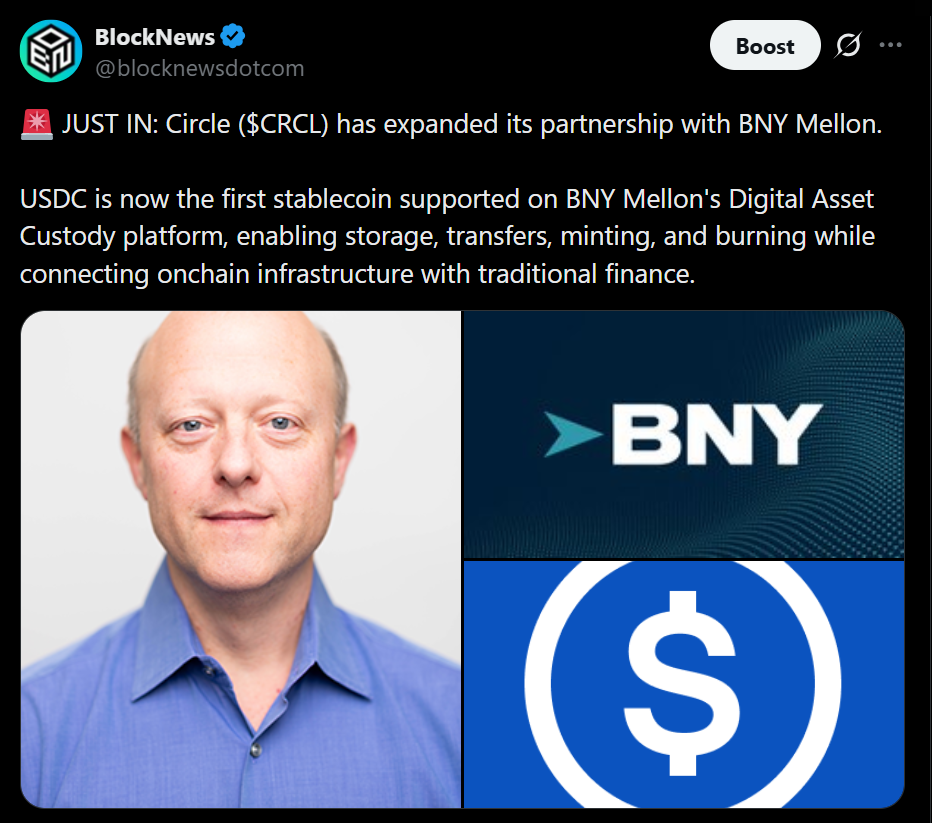
The announcement further reinforces the increasing role of regulated financial institutions in supporting stablecoin adoption as demand for blockchain-based settlement continues to grow.
BNY Brings USDC Into Institutional Banking
Under the expanded partnership, BNY clients can now securely hold USDC within the bank’s regulated digital asset custody platform while instructing Circle to mint new tokens or redeem existing USDC for U.S. dollars.
USDC becomes the first stablecoin supported by BNY’s Digital Asset Custody platform, adding another layer of institutional infrastructure around one of the world’s largest dollar-backed digital assets.
The integration allows financial institutions to manage traditional cash alongside digital assets within a single operational framework, simplifying blockchain-based payments and treasury management.
Connecting Traditional Finance With Blockchain
BNY’s Digital Asset Custody platform was developed to bridge conventional banking services with blockchain technology. In addition to safeguarding digital assets such as Bitcoin, Ethereum, and tokenized securities, the platform integrates custody with payment services, liquidity management, and operational support for institutional clients.
By incorporating USDC into that ecosystem, BNY is making it easier for financial institutions to use stablecoins without leaving familiar banking infrastructure.
The direct connection between regulated custody services and Circle’s minting and redemption system could streamline settlement processes for institutions exploring tokenized assets and blockchain-based financial products.
Stablecoin Adoption Continues to Grow
The partnership reflects the broader trend of major financial institutions embracing stablecoins as digital payment infrastructure matures.
Unlike cryptocurrencies that experience significant price volatility, stablecoins such as USDC are designed to maintain a stable value against the U.S. dollar, making them increasingly attractive for payments, settlements, treasury operations, and tokenized financial markets.
As regulatory clarity improves in major jurisdictions, more banks are beginning to incorporate stablecoin services into their institutional offerings.
More Stablecoins Could Follow
BNY said the current rollout focuses on USDC but indicated that additional stablecoins may be added to the platform over time.
For Circle, the partnership further expands institutional access to USDC and strengthens its position as one of the leading regulated stablecoin issuers. For BNY, it represents another step toward integrating blockchain technology into mainstream financial services.
As banks, asset managers, and corporations continue adopting digital assets, collaborations like this could play an increasingly important role in bringing stablecoins into everyday institutional finance.
Disclaimer: BlockNews provides independent reporting on crypto, blockchain, and digital finance. All content is for informational purposes only and does not constitute financial advice. Readers should do their own research before making investment decisions. Some articles may use AI tools to assist in drafting, but every piece is reviewed and edited by our editorial team of experienced crypto writers and analysts before publication.






 English (US) ·