
 6 months ago
116
6 months ago
116
- Sui and Near both offer high-speed blockchain infrastructure but rely on very different architectural designs.
- Sui focuses on object-based parallel execution, while Near scales through dynamic sharding.
- Stablecoin strategies, privacy features, and ecosystem positioning may ultimately determine which network gains stronger adoption.
Sui and Near often get grouped together in conversations about high-performance blockchains. Both promise fast transaction speeds, low costs, and the ability to scale without choking under demand. On the surface they look like direct competitors… but once you peel back the layers a little, their design philosophies start to drift in very different directions.
The contrast really comes down to how each network imagines the future of blockchain usage. One assumes activity will grow in tightly connected environments, while the other expects a world of fragmented but coordinated ecosystems. These underlying assumptions shape everything—from architecture to developer experience and even how liquidity flows through the network.
Because of that, the real question isn’t simply which chain is “faster.” It’s more about what kind of activity each one is best built to handle. For investors and builders trying to pick a long-term home for capital or applications, those architectural details matter quite a bit.
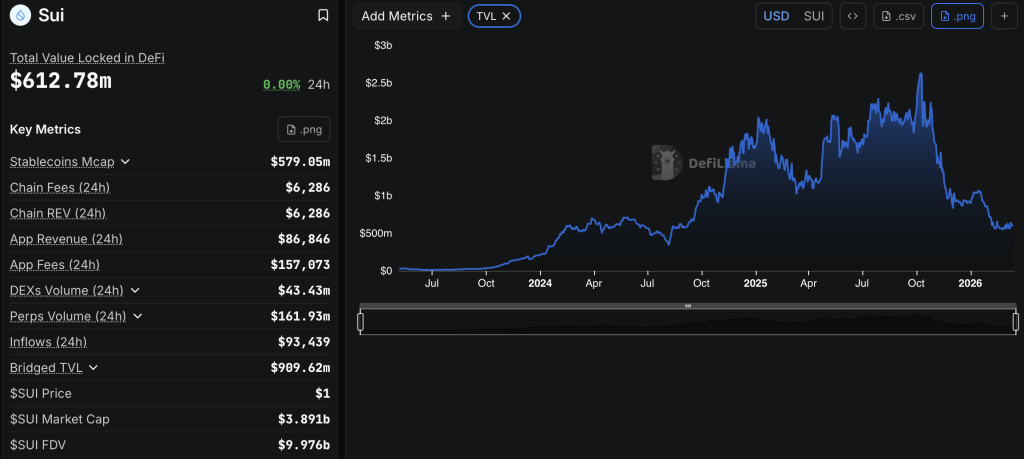
Architecture and Throughput Tell Two Different Stories
Sui’s architecture revolves around what’s known as an object-centric model. In simple terms, assets exist as independent objects, and transactions only need full consensus if they interact with shared objects across the system.
That design allows a lot of transactions to skip the heavy coordination step entirely. When two operations don’t touch the same object, they can execute in parallel, which helps the network finalize transfers incredibly quickly—often around 0.4 to 0.5 seconds.
Near approaches scaling in a different way altogether. Instead of isolating objects, it splits the blockchain state across shards, essentially dividing the workload across multiple segments of the network.
Validators are assigned to specific shards, and the system can dynamically reorganize those shards as activity grows. Finality on Near usually lands somewhere between 0.6 and 1.3 seconds. Developers interact with a system that quietly manages scaling behind the scenes, which reduces the complexity they have to deal with directly.
Right now though, neither network is anywhere near its throughput ceiling. Sui typically processes transactions in the mid-20 TPS range, while Near floats between roughly 30 and 40. The technology can handle far more, but the limiting factor today isn’t processing power—it’s simply demand.
A crypto analyst known as eye zen hour recently pointed out that the real competition has shifted away from headline TPS numbers. Instead, attention is drifting toward things like liquidity depth, cost efficiency, and ecosystem traction. That’s where value tends to accumulate once the infrastructure itself becomes fast enough.
Validator Models Reflect Different Priorities
The way validators operate also highlights the philosophical split between the two networks. Sui leans toward a performance-focused model, requiring relatively strong hardware and larger stake commitments to participate.
That naturally creates a validator set optimized for speed and computational strength. The trade-off is that higher requirements can narrow the pool of participants somewhat.
Near, by contrast, tries to widen participation. It lowers the barrier to entry through lighter hardware demands and dynamic seat pricing, allowing more validators to join the network.
Workload distribution across shards helps balance performance even with that broader participation base. It’s a different philosophy entirely—one focused on accessibility and decentralization rather than raw hardware power.
Neither model is inherently superior. Each one simply optimizes for a slightly different vision of how a blockchain network should grow.
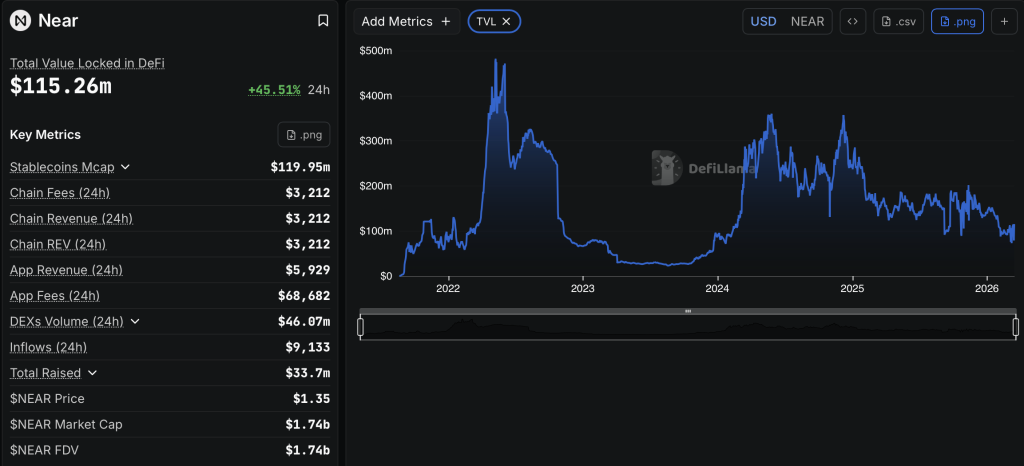
Stablecoins and Privacy Shape the Next Phase of Competition
Stablecoins provide one of the clearest stress tests for blockchain infrastructure. They push networks to handle liquidity movement, fast settlement, compliance considerations, and composability all at once.
On Sui, stablecoins already represent a major portion of activity. Roughly 40 to 50 percent of the chain’s DeFi ecosystem revolves around stable assets, and total value locked surpassed $2 billion during 2025.
Assets like USDsui, suiUSDe, BlackRock-backed USDi, and the over-collateralized BUCK token show a strategy focused on high-speed settlement inside a single execution environment. The network even plans to introduce zero-fee stablecoin transfers in 2026, which could further strengthen its role in payments and financial infrastructure.
Near takes a more cross-chain oriented route. Stablecoins like USDC and USDT operate under the NEP-141 standard, while the Stablecoin Transport Protocol enables assets to move efficiently between ecosystems.
That approach has already produced meaningful volume. Cross-chain transfers facilitated through Near Intents exceeded $13 billion in 2025, positioning stablecoins less as local settlement tools and more as coordination mechanisms across multiple chains.
Privacy is another area where their strategies diverge. Sui currently offers pseudonymous accounts and object-level isolation, but deeper privacy features are scheduled for a 2026 rollout. These include zero-knowledge proofs, homomorphic encryption, and selective disclosure systems.
Near, meanwhile, already pushed privacy features live earlier in 2026 with Confidential Accounts and Confidential Intents. These allow private cross-chain execution and even enable automated actions by AI agents operating on encrypted instructions.
That difference is notable. Near’s privacy stack is active today, while Sui’s more advanced cryptographic protections are still sitting on the roadmap.
Market Positioning Could Decide the Long-Term Winner
Beyond technical architecture, the two networks are also positioning themselves differently in the broader market. Sui has gained traction in areas like gaming, consumer payments, storage solutions, and institutional financial products.
Near, on the other hand, is leaning heavily into AI-native infrastructure. Its narrative revolves around cross-chain coordination, developer accessibility through JavaScript tooling, and an intent-based architecture designed to simplify complex interactions.
Both directions are logical responses to where blockchain demand might go next. And honestly… neither one guarantees success.
Ultimately, adoption patterns over the next market cycle will likely determine which scaling assumption proves more durable. If activity clusters around fast single-environment execution, Sui’s design could shine. But if cross-chain coordination and AI-driven automation dominate the landscape, Near’s architecture might end up looking uncannily well-timed.
Disclaimer: BlockNews provides independent reporting on crypto, blockchain, and digital finance. All content is for informational purposes only and does not constitute financial advice. Readers should do their own research before making investment decisions. Some articles may use AI tools to assist in drafting, but every piece is reviewed and edited by our editorial team of experienced crypto writers and analysts before publication.





 English (US) ·