
 3 months ago
86
3 months ago
86
Peter Tuchman, the New York Stock Exchange veteran known as the Einstein of Wall Street, says the GPU boom looks like Bitcoin’s early mining era. He argues investors should trace AI’s supply chain instead of chasing headline names.
The trader, who moves between $500 million and $1 billion in stock daily, also cautioned against hype-driven investing.
Why the GPU Boom Looks Like Early Bitcoin Mining
Tuchman, the longest-serving trader on the NYSE floor, described GPUs as a scarce resource, much like bitcoin in its first mining wave.
Hobbyists once mined the asset from basements. Today, he sees GPU entrepreneurs building marketplaces for limited computing power.
The scarcity is measurable. Nvidia disclosed over $500 billion in Blackwell and Rubin chip orders through 2026 last October, a figure CEO Jensen Huang lifted to $1 trillion through 2027 at GTC in March.
The parallel runs in both directions. Several miners became AI powerhouses after converting their facilities into data centers, including IREN through its $9.7 billion Microsoft deal.
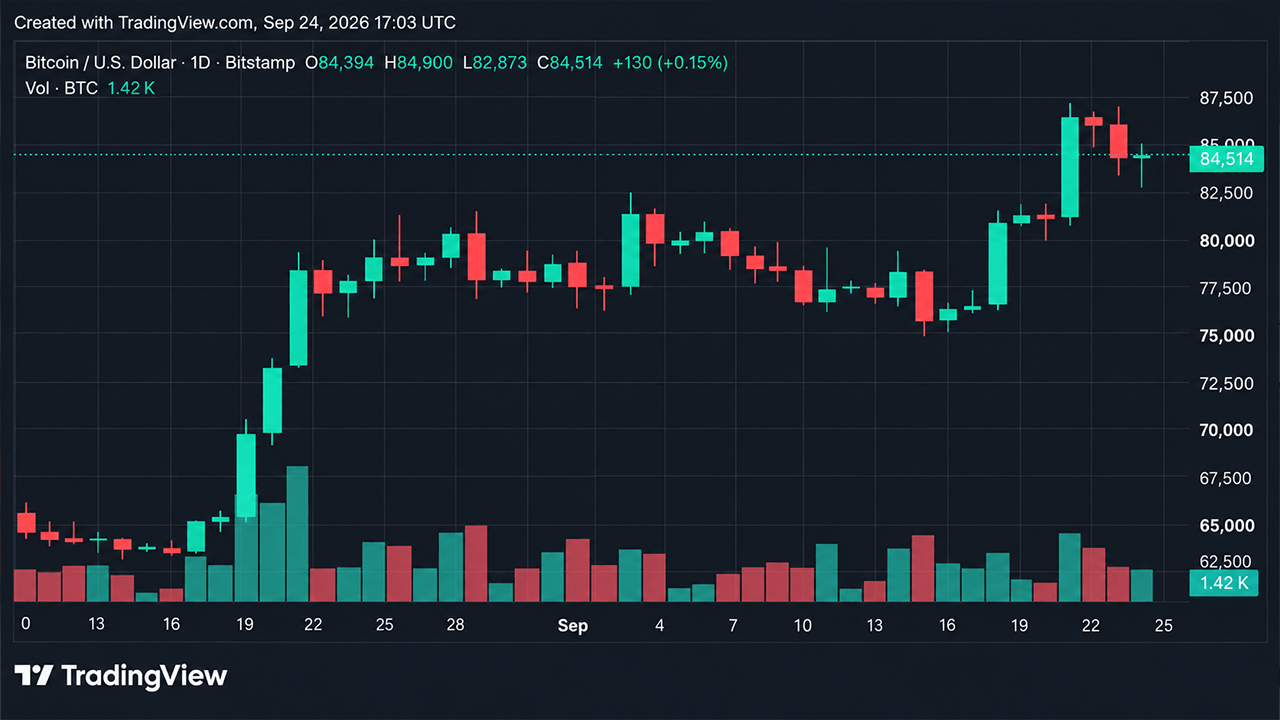
Meanwhile, Bitcoin miner stocks increasingly track AI infrastructure spending rather than coin prices. Bitcoin (BTC) itself traded near $61,205 on Wednesday, down 2.4% over 24 hours.
Energy sits at the center of that trade. The IEA expects data center power demand to more than double to 945 TWh by 2030, near Japan’s annual usage.
Huang has said power supply will decide how far AI can scale. Tuchman echoed the point, citing generators, grid capacity, and data center buildouts as the next frontier.
Follow us on X to get the latest news as it happens
Follow the AI Supply Chain, Not the Hype
Tuchman calls this the secondary and tertiary trade. Component makers, rare earth suppliers, and energy producers trade as independent public companies.
Studying them, he suggests, lets investors position before the crowd arrives.
He paired the advice with a warning drawn from the meme stock era, when many retail buyers purchased at the top.
“FOMO, hype and hope are not sustainable trading strategies,” Tuchman said on the School of Hard Knocks podcast, recalling traders still holding GameStop from its $483 peak in January 2021.
The caution rests on four decades of pattern recognition. Tuchman worked the floor through Black Monday in 1987, the dot-com collapse, and the 2008 financial crisis.
Each crash, he noted, arrived with the market at record highs. He is not alone in urging discipline.
Billionaire investor Bill Ackman compared the rush into chips and energy stocks to dot-com era crowd behavior, though he calls AI a boom rather than a bubble.
However, Chinese exports beat forecasts in May on AI-driven demand, a sign the buildout retains momentum. Questions about an AI bubble have still trailed Nvidia’s record earnings.
Capital and policy continue to pour in. OpenAI’s confidential IPO filing and Washington’s AI ownership plan both signal how much money now rides on the sector’s plumbing.
Tuchman’s framework treats AI as infrastructure rather than a lottery ticket.
Whether the GPU buildout follows Bitcoin mining’s path toward consolidation may become clearer as energy deals and chipmaker earnings land in the coming quarters.
The post The Einstein of Wall Street Reveals AI’s Hidden Winners appeared first on BeInCrypto.




 English (US) ·