
 2 months ago
49
2 months ago
49
- Federal Reserve added $8.07B through short-term repo operations
- Move supports liquidity but stops short of full quantitative easing
- Increased liquidity often boosts risk appetite for assets like Bitcoin
The Federal Reserve just injected over $8 billion into the financial system, and while that might sound routine, it’s one of those moves that tends to matter more than it looks at first glance. The liquidity came through repo operations, where the Fed lends cash in exchange for Treasuries, essentially keeping short-term funding markets stable and functioning smoothly.
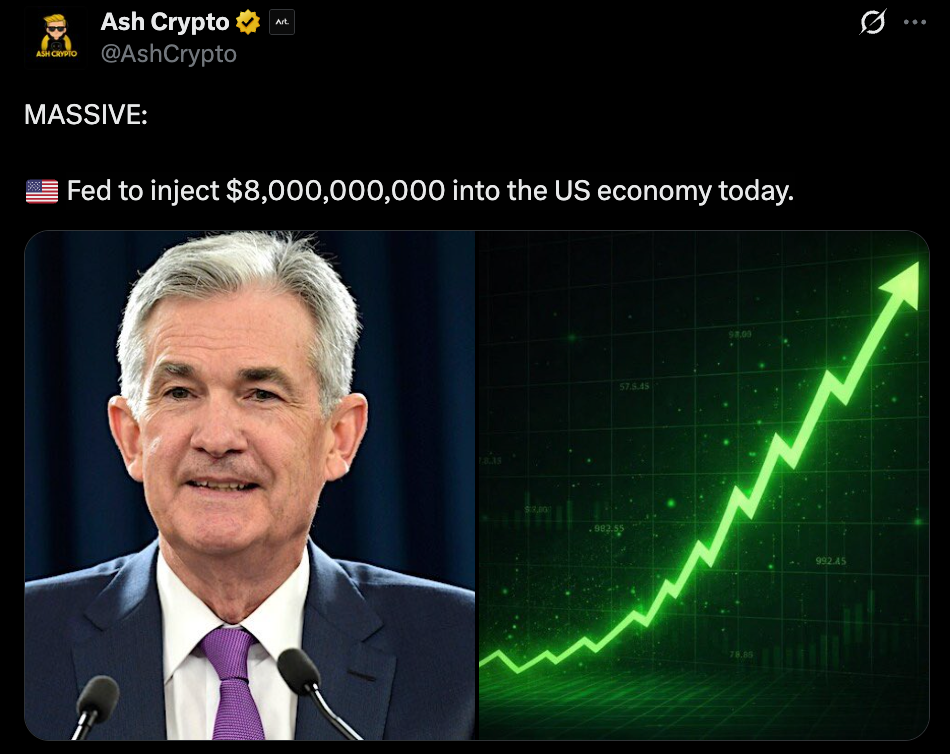
It’s not the kind of headline that screams policy shift, but it does signal something underneath. The Fed is still actively managing liquidity, even if it’s not calling it anything dramatic.
Not QE, But the Line Feels Blurry
Officially, this isn’t quantitative easing. It’s a targeted, short-term operation designed to keep reserves at what the Fed considers an “ample” level. But the distinction, at least from a market perspective, doesn’t always feel that clear.
When liquidity is added, even temporarily, it tends to ease financial conditions. Borrowing costs drop slightly, credit flows a bit more freely, and markets pick up on that. Whether it’s labeled QE or not almost becomes secondary to the effect it creates.
Liquidity Still Drives Risk Appetite
This is where crypto starts to come into the picture. More liquidity in the system doesn’t automatically send Bitcoin higher, but it does tend to increase appetite for risk. And Bitcoin, along with the broader crypto market, sits pretty far out on that risk curve.
When capital is easier to access, it looks for returns. That flow often finds its way into equities, speculative assets, and yes, crypto. It’s not a perfect correlation, but it’s consistent enough that traders pay attention every time the Fed steps in.
Small Move, Bigger Context
To be fair, $8 billion isn’t massive in the context of the Fed’s balance sheet, which is measured in the trillions. On its own, this doesn’t redefine policy or signal a major pivot. It’s more like a maintenance adjustment than a strategic shift.
But these smaller moves can add up. They shape the backdrop markets operate in, quietly influencing conditions without dominating headlines.
The Real Signal Comes Next
What matters more is what comes next. The upcoming FOMC meeting in early May will likely provide clearer direction on how the Fed is thinking about liquidity, rates, and broader economic conditions.
For now, this falls into that category of “supportive, but not decisive.” It adds a bit of fuel to the system, and in markets like crypto, even small amounts of extra liquidity can go further than expected.
Disclaimer: BlockNews provides independent reporting on crypto, blockchain, and digital finance. All content is for informational purposes only and does not constitute financial advice. Readers should do their own research before making investment decisions. Some articles may use AI tools to assist in drafting, but every piece is reviewed and edited by our editorial team of experienced crypto writers and analysts before publication.









 English (US) ·