
 6 months ago
110
6 months ago
110
- Trump is publicly urging the Fed to cut interest rates immediately
- Rising oil prices and Middle East tensions are pushing inflation fears higher
- Markets now expect the Fed to hold rates through much of 2026
President Donald Trump may be focused heavily on the escalating conflict in the Middle East, but he is still directing sharp criticism toward Federal Reserve Chairman Jerome Powell. The president renewed his pressure campaign against the central bank this week, demanding that interest rates be cut immediately rather than waiting for the next policy meeting.
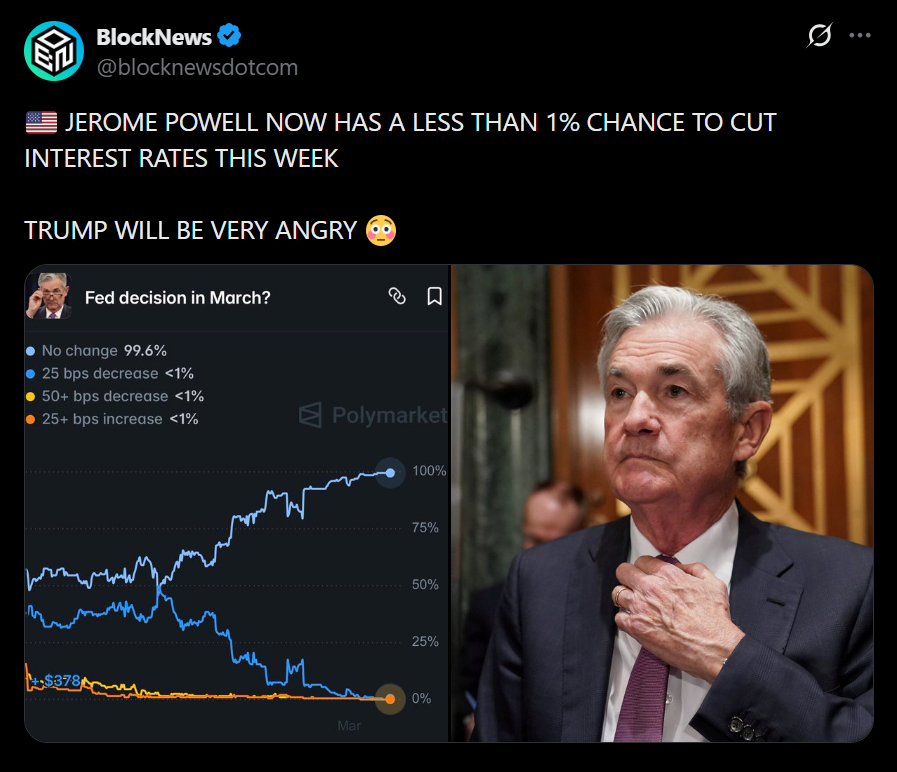
Posting on Truth Social, Trump criticized Powell—whom he often calls “Jerome ‘Too Late’ Powell”—for not acting sooner as oil prices surge. Crude recently climbed back to around $100 per barrel, a level that is raising fresh concerns about inflation and its impact on households and businesses.
Trump argued that lowering interest rates could help reduce borrowing costs and ease financial pressure across the economy. However, the reality is more complicated. Even if the Federal Reserve were to cut rates quickly, it typically takes months for those changes to meaningfully influence mortgage costs, loans, and consumer financing.
Rising Oil Prices Are Complicating Fed Policy
The latest spike in oil prices has become a major factor shaping expectations for monetary policy. Higher energy costs tend to push inflation higher, which makes it more difficult for the Federal Reserve to justify cutting interest rates.
With the conflict involving Iran and regional instability pushing energy markets upward, investors are increasingly skeptical that the Fed will ease policy anytime soon. Inflation expectations are rising as consumers and businesses prepare for higher fuel and energy costs filtering through the economy.
Despite these concerns, Trump signaled that the geopolitical objectives behind the conflict remain his primary focus. While acknowledging that the U.S. can profit from higher oil prices, he emphasized that preventing Iran from developing nuclear weapons remains the administration’s priority.
Markets Expect the Fed to Hold Rates for Now
The Federal Reserve’s rate-setting committee, the Federal Open Market Committee (FOMC), is scheduled to meet next week. Market expectations strongly point toward no policy change.
According to the CME FedWatch tool, traders currently assign more than a 99% probability that the Fed will keep interest rates unchanged at the upcoming meeting. Expectations for rate cuts have also shifted significantly over the past few weeks as inflation concerns intensified.
Some economists now believe the Fed could delay easing for much longer than previously expected.
Economists See Fewer Rate Cuts in 2026
Gregory Daco, chief economist at EY-Parthenon, recently argued that the central bank may not cut rates at all this year. In a note to clients, he explained that the Fed will likely wait for clear economic signals before adjusting policy.
Those signals could come in two forms. Either inflation must show convincing progress toward the Fed’s 2% target, or the labor market must weaken significantly enough to justify intervention.
Recent economic data has provided mixed signals. While the unemployment rate currently sits at 4.4%, hiring activity has slowed and nonfarm payroll employment fell by 92,000 in February, adding to concerns about labor market stability.
Wall Street Is Divided on the Fed’s Next Move
Not all analysts agree that the Federal Reserve will remain on hold for the entire year. Some economists believe markets may be underestimating the possibility of rate cuts later in 2026.
Goldman Sachs economist David Mericle recently suggested that the Fed could move toward easing by September if inflation shows continued improvement and labor market conditions soften further.
Similarly, Bank of America economist Aditya Bhave argued that markets may be misreading how the Fed typically reacts to oil-driven inflation shocks. In situations where economic growth slows and employment weakens, the central bank may still consider easing policy despite temporary inflation spikes.
For now, however, the combination of rising energy prices, geopolitical tensions, and stubborn inflation means the Federal Reserve is likely to proceed cautiously.
Disclaimer: BlockNews provides independent reporting on crypto, blockchain, and digital finance. All content is for informational purposes only and does not constitute financial advice. Readers should do their own research before making investment decisions. Some articles may use AI tools to assist in drafting, but every piece is reviewed and edited by our editorial team of experienced crypto writers and analysts before publication.






 English (US) ·