
 1 hour ago
12
1 hour ago
12
The U.S. government has paid back $81 billion in tariffs so far this fiscal year after the Supreme Court ruled President Donald Trump’s sweeping import levies illegal in February. The figure dwarfs the $5 billion refunded over the same stretch a year earlier.
Key Takeaways
- U.S. tariff refunds hit $81 billion this fiscal year, up from $5 billion a year earlier, per Treasury data.
- Trump’s IEEPA tariffs fell 6-3 in February; refund obligations were estimated at up to $166 billion.
- The federal deficit reached $1.367 trillion in nine months as a court refused to let the payouts slow.
Refunds Surge After February’s Ruling
The refund tally, flagged Monday, covers the fiscal year that began in October 2025. Figures reported by Agence France-Presse (AFP) show most of the money went out the door in May and June, months after the high court struck down the levies. A Treasury Department official told reporters the surge is “almost entirely because of the Supreme Court decision.”
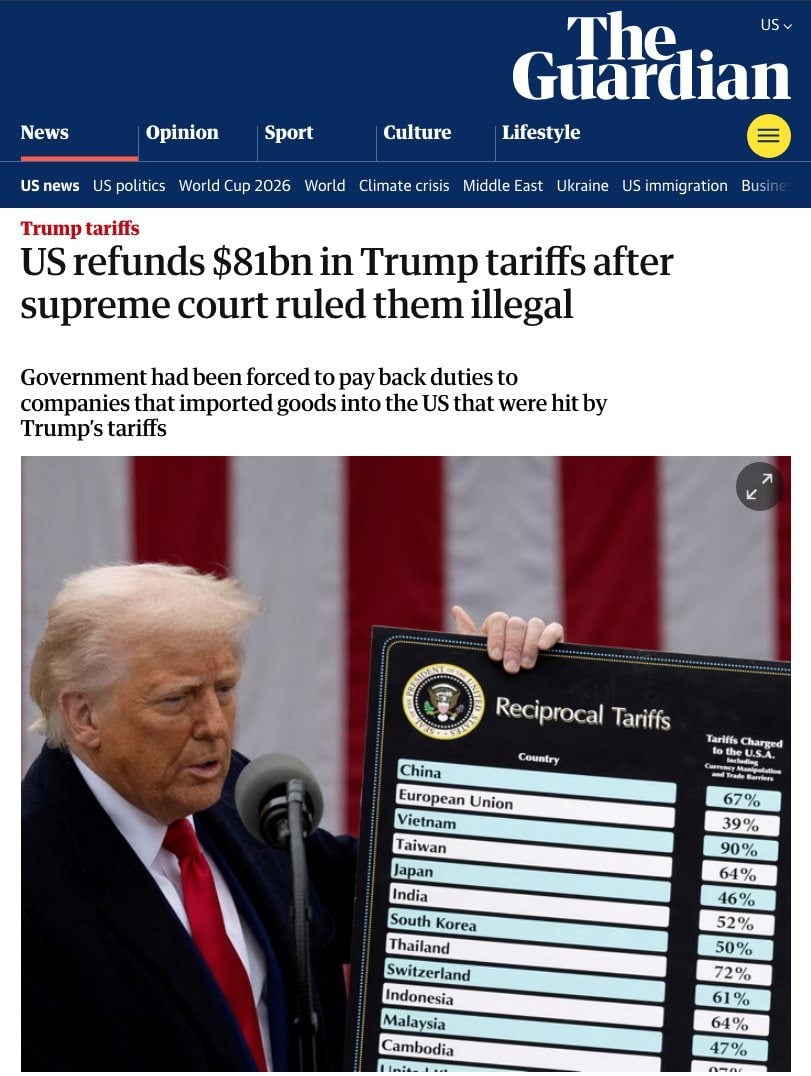
That decision, handed down 6-3 in February, found Trump exceeded his authority by using the International Emergency Economic Powers Act (IEEPA), a 1977 law designed for national emergencies, to impose broad “reciprocal” tariffs on U.S. trading partners. The ruling obliged the government to return money to the importers that had already paid, and the U.S. Treasury has been processing those claims ever since.
Trump has made no secret of his frustration as he blasted the refunds as “infuriating” in a May interview, when estimates placed the government’s total obligation at roughly $149 billion to $166 billion, plus interest and administrative costs. Measured against those projections, the $81 billion paid out so far suggests the Treasury may be only around halfway through the bill.
Deficit Pressure Mounts
The payouts are landing on an already strained budget, given that the federal deficit reached $1.367 trillion over the first nine months of the fiscal year, up 2% from the prior year. Interest payments on the national debt topped $1 trillion, a 14% jump, while military spending rose 5% amid conflicts in the Middle East.
The irony is hard to miss as Trump promoted the tariffs as a tool to strengthen domestic manufacturing, gain leverage in trade talks and shrink the deficit, and the gap had initially narrowed as tariff revenue rolled in. The Supreme Court’s ruling reversed that flow, turning a revenue stream into a nine-figure liability.
The administration has tried to slow the bleeding, without success. A federal court rejected an attempt by the government to stall the refund process, keeping the payments on track for the companies that overpaid.
Impact on Crypto Traders
Trump’s threat of a 15% global tariff in February rattled crypto markets, briefly dragging the combined altcoin market capitalization below $1 trillion even as investors welcomed the Supreme Court’s ruling against the previous levies. The president vowed at the time to work around the court with new duties, keeping trade policy on traders’ radars ever since.
Bitcoin is trading near $63,000 at the time of writing, and macro commentators argue that swelling deficits and rising interest costs strengthen the long-term case for scarce assets such as bitcoin. That thesis, however, remains contested since tariff-driven volatility has also punished risk assets on escalation headlines and lifted them on relief.








 English (US) ·