
 1 hour ago
20
1 hour ago
20
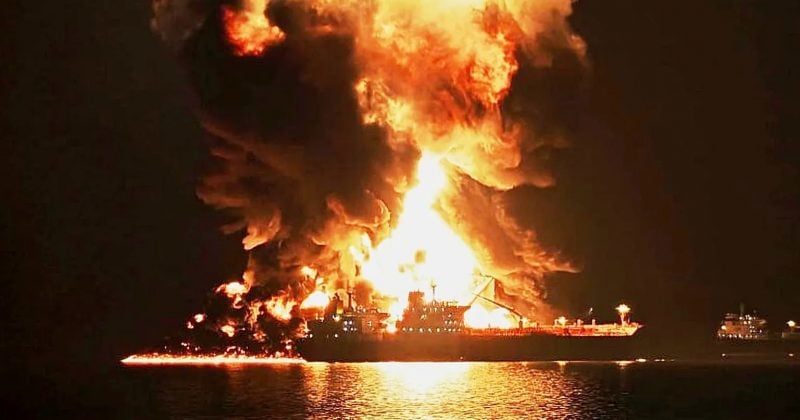
Iranian cruise missiles struck two UAE-owned supertankers in the southern Strait of Hormuz on July 13-14, killing one sailor and injuring eight others. The UAE’s Ministry of Defense called the attacks a “brazen” violation of international law and invoked its right to self-defense, while Gulf states quickly lined up behind Abu Dhabi in condemning the strikes.
What happened in the Strait
The two supertankers were hit during the latest escalation in the broader Iran-US conflict that has defined much of 2026’s geopolitical landscape. Among the injured crew members, six were Indian nationals and two were Ukrainian, according to reporting from The National.
ADNOC CEO Sultan Al Jaber didn’t mince words, characterizing the attacks as “global economic warfare.” The UAE operates one of the largest tanker fleets transiting the Strait of Hormuz, and any sustained threat to that corridor has cascading effects well beyond Abu Dhabi.
Gulf states have rallied around the UAE’s position, presenting a unified front that appears aimed at building momentum for formal UN action.
Why crypto traders should care about oil tankers
The Strait of Hormuz is the single most important chokepoint in global energy logistics, with roughly 20% of the world’s oil passing through it every day. Projects that have built digital assets linked to energy prices, including tokens pegged to oil benchmarks like WTI crude, face a particularly interesting moment. Volatility in the underlying commodity can be a double-edged sword for these instruments, attracting speculative volume while simultaneously testing the resilience of their peg mechanisms.
The UAE’s dual identity problem
The attack puts the UAE in an awkward position that extends beyond conventional defense policy. Abu Dhabi has spent years building itself into the most crypto-friendly jurisdiction in the Gulf, with regulatory frameworks for virtual assets, blockchain-based trade finance initiatives, and ambitions to become a global hub for tokenized real-world assets.
What investors should watch
For crypto specifically, watch three things. First, Bitcoin’s correlation with oil prices over the next few weeks will tell you whether the market is treating this as a macro event or background noise. Second, trading volumes on tokenized energy assets will indicate whether the incident is creating opportunity or fear in that niche. Third, monitor stablecoin flows in and out of UAE-based exchanges for signs of capital repositioning.
Insurance premiums for vessels transiting the Strait will almost certainly rise, adding friction costs that get passed through to global energy prices. Those costs eventually show up in inflation data, which central banks respond to with tighter monetary conditions, which constrains the liquidity environment that crypto has relied on for its post-2024 recovery.
Disclosure: This article was edited by Editorial Team. For more information on how we create and review content, see our Editorial Policy.




 English (US) ·