
 3 months ago
56
3 months ago
56
- A $1,000 XRP price would require a market capitalization approaching $100 trillion
- XRP’s large supply and escrow releases create ongoing selling pressure
- Long-term growth may depend more on adoption than extreme price predictions
For years now, the idea of XRP reaching $1,000 has floated around crypto forums, YouTube channels, and social media threads. It’s one of those price targets that sounds thrilling at first glance. After all, if XRP ever did hit four digits, even a relatively small investment could turn into something enormous.
But once you slow down and actually run the numbers… the narrative starts to wobble a bit. The math behind it tells a very different story.
The Market Cap Reality Behind a $1,000 XRP Price
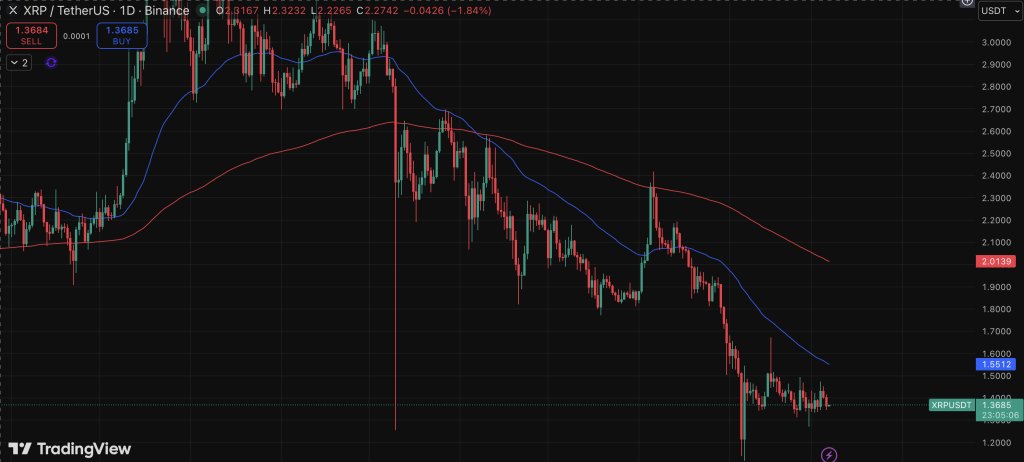
Right now, XRP trades somewhere around $1.40, with roughly 56 billion tokens circulating in the market. That puts the asset’s market capitalization at around $78 billion, give or take depending on price movement.
Now imagine XRP climbing all the way to $1,000 per coin. With that same 56 billion circulating supply, the network’s total value would balloon to roughly $56 trillion.
That number alone is staggering. But it becomes even more extreme when you consider XRP’s full maximum supply, which sits at 100 billion tokens. At $1,000 per XRP, the theoretical valuation would jump to about $100 trillion.
To put that into perspective… that figure is larger than the entire global economy. Once you frame it that way, the $1,000 prediction starts to feel less like a forecast and more like internet fantasy.
XRP Supply Structure Creates Ongoing Pressure
Another factor often overlooked in these discussions is XRP’s supply structure. Compared to many other major cryptocurrencies, XRP has a very large number of tokens already in existence.
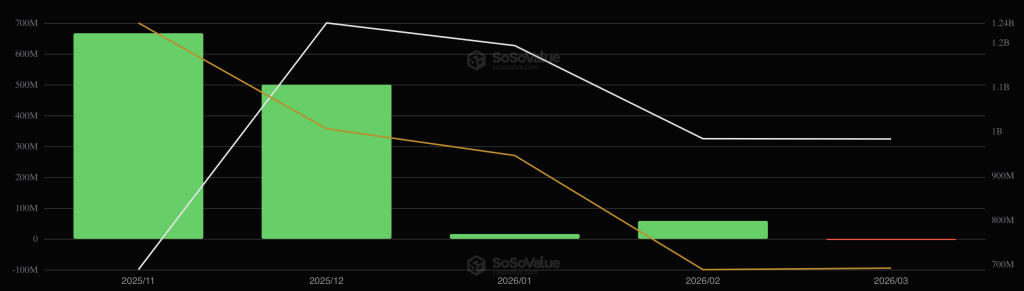
A significant portion of those tokens is held by Ripple in escrow accounts. Each month, up to one billion XRP is released from escrow as part of a long-running distribution system.
Ripple sells some of those tokens into the market, while the remaining amount typically gets locked back into escrow for future releases. This cycle has been repeating year after year.
That steady flow of new supply matters. Whenever the XRP price begins climbing during market rallies, additional tokens can enter circulation. And when supply increases while demand stays the same, price momentum tends to slow down.
Many predictions about extreme XRP valuations overlook this dynamic entirely. But in financial markets, supply pressure rarely disappears just because investors want higher prices.
Comparing XRP With Bitcoin and Ethereum
Looking at other crypto assets can help add context. Bitcoin, for example, crossed the $1,000 mark back in 2017 after nearly a decade of development, global attention, and growing adoption.
Its supply cap of 21 million coins also played a huge role. Scarcity tends to amplify price movements when demand increases.
Ethereum followed a different path but reached similar milestones. By 2020, ETH had crossed the $1,000 level thanks to massive developer activity, decentralized finance growth, and an expanding ecosystem of financial tools.
XRP has been around since 2012 — which means it has already lived through multiple crypto bull and bear cycles. Yet despite those cycles, the asset has rarely traded above a few dollars.
The gap between current prices and the $1,000 narrative remains enormous.
Institutional Investors Focus on Supply and Adoption
Large investors typically approach these markets with a different mindset. Institutional capital tends to focus heavily on supply mechanics, real demand, and long-term adoption trends before committing serious money.
When a cryptocurrency has tens of billions of tokens circulating, the level of global demand required to justify extreme valuations becomes incredibly large.
Without that demand, prices simply can’t sustain those levels. The math won’t allow it.
That’s not pessimism — it’s just how market structures work.
What XRP Could Realistically Achieve
None of this means XRP lacks value or utility. The network is designed to process transactions quickly, often settling payments within seconds. It also allows financial institutions to move money across borders with very low costs compared to traditional systems.
From a technological standpoint, that efficiency still matters.
But strong technology does not automatically translate into unlimited token prices. Crypto markets still follow basic economic rules — supply, demand, and capital inflows.
XRP could absolutely reach new highs over time if adoption expands and the ecosystem continues to grow. But a future where XRP climbs to $1,000 would require economic conditions far beyond anything the crypto market has seen so far.
Once the numbers are laid out clearly, the difference between hype and reality becomes a lot easier to spot.
Disclaimer: BlockNews provides independent reporting on crypto, blockchain, and digital finance. All content is for informational purposes only and does not constitute financial advice. Readers should do their own research before making investment decisions. Some articles may use AI tools to assist in drafting, but every piece is reviewed and edited by our editorial team of experienced crypto writers and analysts before publication.





 English (US) ·