
 6 months ago
87
6 months ago
87
- Circle shares fall nearly 20% after CLARITY Act draft update
- Proposed rules would ban yield on passive stablecoin balances
- Regulation could reshape how stablecoins compete for capital
Circle just ran into a regulatory wall, and the market reacted fast. Shares dropped nearly 20%, sliding back toward the $100 level after reports revealed new draft language in the CLARITY Act that would ban yield on stablecoin balances. It’s a sharp reversal, especially considering how strong the stock had been running just days before.
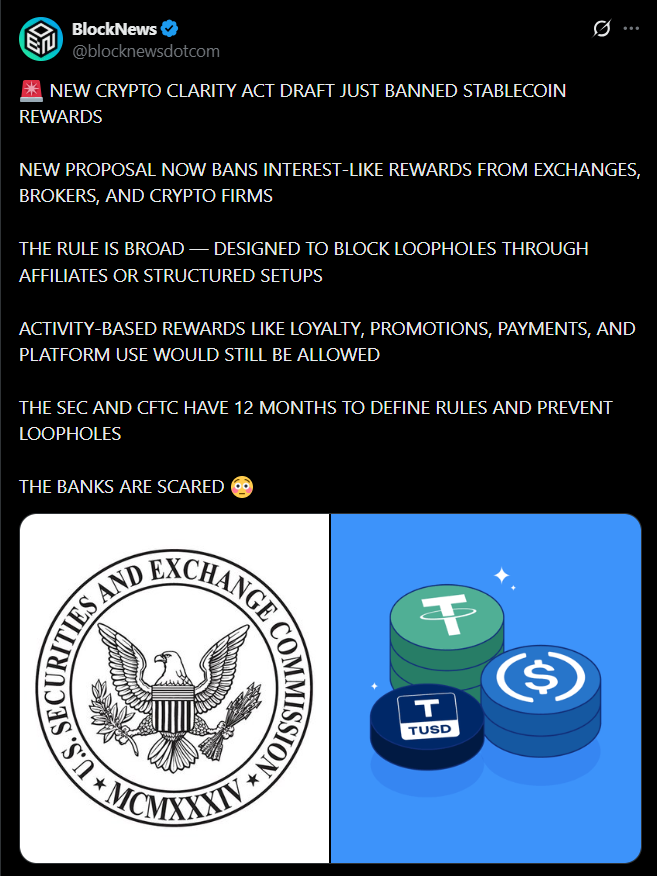
At the center of the reaction isn’t what USDC does today, it’s what it might not be allowed to do tomorrow. And that distinction is starting to matter more than expected.
Yield Restrictions Change the Narrative
The proposed rules would prohibit issuers from offering passive rewards simply for holding stablecoins. In other words, no interest-like returns tied to balances. Activity-based rewards might still be allowed, but the framework is still unclear, and that uncertainty is enough to shake confidence.
For Circle, this limits a key potential evolution. Stablecoins have long been seen as more than just payment rails, there’s been a growing narrative around turning them into yield-generating financial products. This proposal cuts directly into that idea.
The Banking Sector Is Pushing Back
Part of what’s driving this shift is pressure from traditional finance. Banks have argued that yield-bearing stablecoins begin to resemble deposits, potentially pulling capital away from the traditional lending system.
The draft language appears to reflect that concern. By restricting passive yield, regulators are trying to draw a clear line between stablecoins and bank accounts. It’s a compromise, but one that leans heavily toward protecting existing financial structures.
Market Reaction Reflects Future Uncertainty
Circle’s stock had surged more than 175% in recent months, climbing from around $50 to $135 before this pullback. That rally was partly driven by optimism around stablecoins becoming more integrated into the financial system.
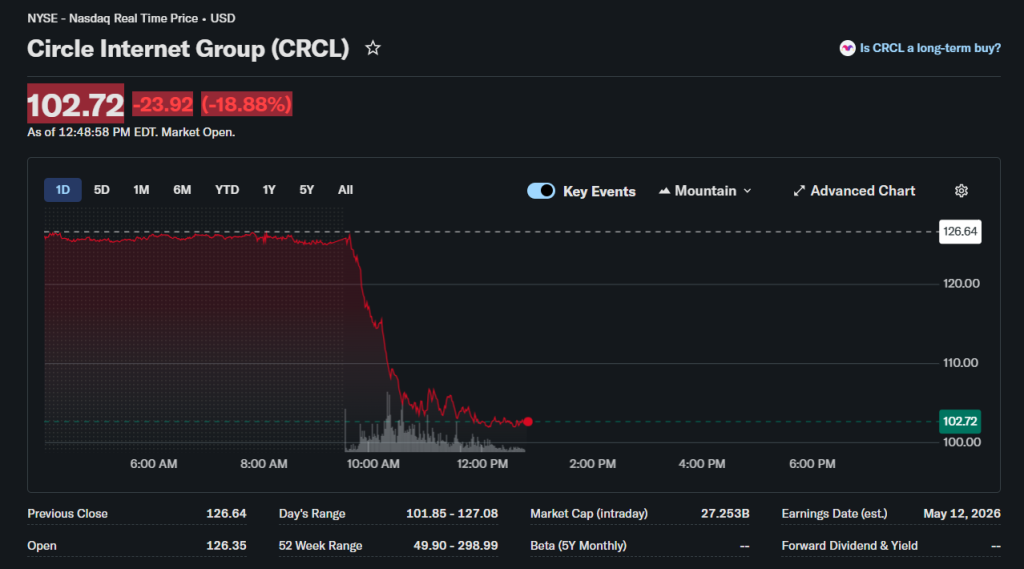
Now, that outlook looks a bit more constrained. The selloff isn’t just about current fundamentals, it’s about the future potential being narrowed. And markets tend to react quickly when growth narratives shift.
Stablecoin Competition Could Shift
If yield remains restricted, it changes how stablecoins compete. Products like USDC may remain strong for payments and liquidity, but they lose an edge in attracting capital looking for returns.
That could open space for alternative structures, or push innovation into more complex, activity-based reward systems. Either way, the landscape becomes more fragmented, and possibly more competitive.
Regulation Becomes the Deciding Factor
The CLARITY Act is still evolving, and nothing is finalized yet. But the direction is becoming clearer. Stablecoins are being shaped not just by technology or demand, but by how regulators define their role within the financial system.
And for Circle, that means the path forward may look different than expected. Not necessarily worse, but more constrained, more defined, and less flexible than the open-ended growth narrative many had priced in.
Disclaimer: BlockNews provides independent reporting on crypto, blockchain, and digital finance. All content is for informational purposes only and does not constitute financial advice. Readers should do their own research before making investment decisions. Some articles may use AI tools to assist in drafting, but every piece is reviewed and edited by our editorial team of experienced crypto writers and analysts before publication.







 English (US) ·