
 3 months ago
43
3 months ago
43
- Banks spent nearly a decade building crypto infrastructure quietly
- Tokenized assets are the real long-term institutional focus
- Regulatory clarity is enabling systems that were already prepared
Wall Street didn’t suddenly decide to “get into crypto.” That narrative feels neat, but it’s not really accurate. What’s happening now looks more like activation than adoption. According to insights echoed by major institutions, banks have been building the necessary infrastructure for years, custody, compliance, risk systems, all quietly wired in the background while the public focused on price cycles.
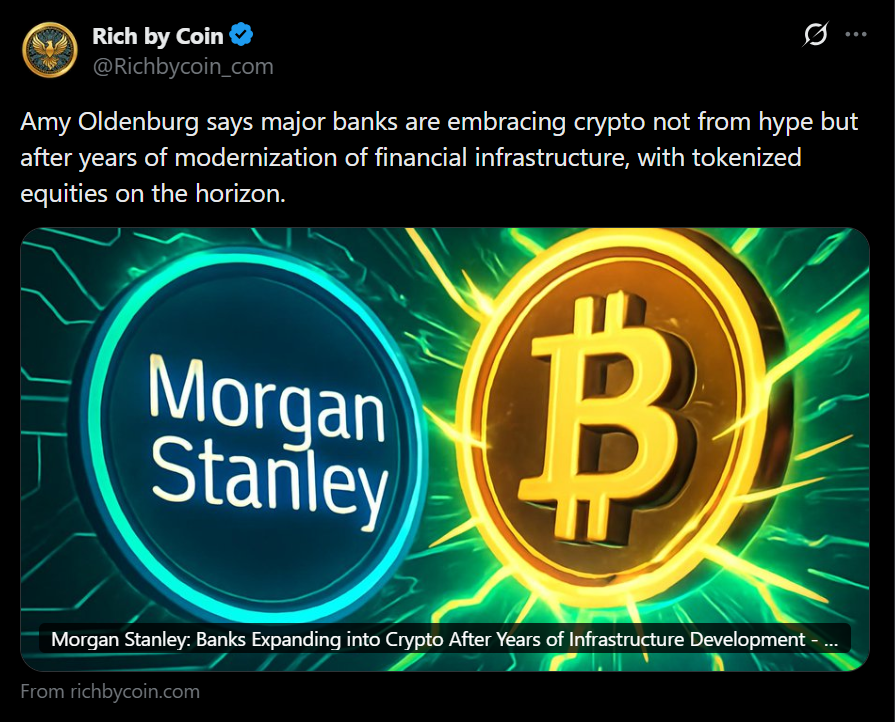
That slow build matters. Because when institutions managing trillions move, they don’t improvise. They prepare, sometimes for years, before flipping the switch.
This Was Always About Infrastructure
While crypto-native firms moved fast, banks moved differently. They focused on building systems that could actually handle scale, regulated custody solutions, internal compliance layers, and frameworks that align with global financial rules. It wasn’t exciting work, but it was necessary.
And now those systems are ready. That’s the shift. Not a sudden interest, but a transition from preparation to deployment.
Tokenization Is the Real Endgame
Bitcoin ETFs may have grabbed headlines, but they’re not the main objective. They’re more like an entry point. The bigger opportunity sits in tokenized assets, stocks, bonds, and other traditional instruments moving onto blockchain rails.
If that happens at scale, markets don’t just get faster. They change structurally. Settlement becomes near-instant, intermediaries shrink, and access expands beyond traditional boundaries. It’s not just efficiency, it’s a redesign of how capital moves.
Regulation Finally Opened the Door
For years, the missing piece was regulatory clarity. Banks couldn’t fully deploy these systems without knowing how assets would be classified or treated under the law. That uncertainty kept everything in a holding pattern.

Now, with ETF approvals, evolving frameworks, and clearer global standards, that barrier is starting to lift. The strategy didn’t change, the environment did. And that’s what makes execution possible now.
Institutions Don’t Move in Half Steps
One thing worth keeping in mind is how institutions operate. They don’t test markets the way retail does. When they commit, it’s usually with scale in mind. Infrastructure is rolled out, integrated, and expanded, not experimented with casually.
That’s why this phase feels different. It’s not about whether banks are interested. It’s about how quickly they can deploy what they’ve already built.
A Shift That Compounds Over Time
Once tokenization infrastructure is live, it tends to compound. More assets move onchain, more liquidity follows, and systems become harder to reverse. It’s not a one-time shift, it’s a gradual transformation that builds momentum.
And that’s the key takeaway. This isn’t hype or a short cycle. It’s a long setup finally starting to play out, one that could reshape how markets function over the next decade.
Disclaimer: BlockNews provides independent reporting on crypto, blockchain, and digital finance. All content is for informational purposes only and does not constitute financial advice. Readers should do their own research before making investment decisions. Some articles may use AI tools to assist in drafting, but every piece is reviewed and edited by our editorial team of experienced crypto writers and analysts before publication.







 English (US) ·