
 1 month ago
42
1 month ago
42
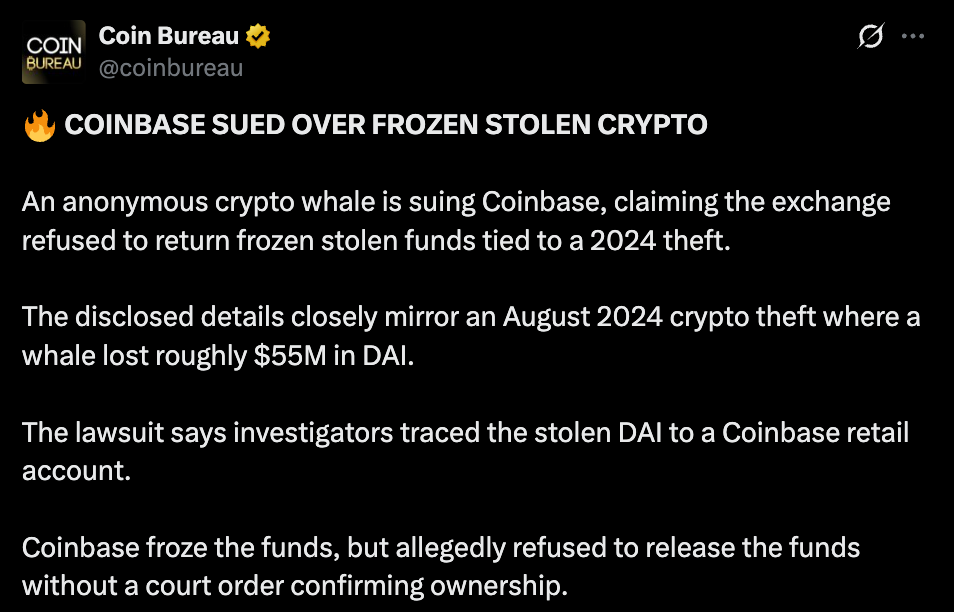
- Coinbase froze stolen crypto tied to a $55M phishing attack in 2024
- Victim claims the exchange has refused to release funds for 18 months without a court order
- Lawsuit raises questions about how centralized exchanges handle recovered assets
Coinbase is facing a lawsuit over a situation that sounds straightforward at first, stolen crypto was traced to an exchange account, the funds were frozen, and the victim wants them back. But the longer the timeline stretches, the more complicated, and uncomfortable, the situation starts to look.
Because at some point, legal caution starts colliding with the question of whether justice is actually being delayed.
A Massive Phishing Attack
The case began after a crypto whale reportedly lost around $55 million in DAI during a phishing attack linked to a fake DeFiSaver interface. The attacker allegedly used Inferno Drainer, a scam toolkit that tricks users into approving malicious wallet permissions without exploiting any blockchain protocol directly.
Technically sophisticated, but depressingly simple at the same time.
Following the Money On-Chain
Instead of disappearing completely, investigators were able to trace portions of the stolen funds through Tornado Cash and eventually into a Coinbase retail account. That’s where things shifted from an on-chain crime story into a legal and operational issue for a centralized exchange.
According to the lawsuit, Coinbase acknowledged the account and froze the funds back in December 2024.
The Problem Is What Happened After
The dispute isn’t really about the freeze itself. In fact, the plaintiff appears to agree Coinbase acted appropriately by preventing the funds from moving further.
The issue is that, despite allegedly receiving sworn proof of ownership and investigative reports linking the assets to the theft, Coinbase still refused to release the funds without a formal court order, leaving the money frozen for roughly 18 months.
Legal Caution vs Responsibility
From Coinbase’s perspective, there’s an obvious reason for caution. Returning funds incorrectly could expose the company to major liability, especially in cases involving large sums and international actors.

But the lawsuit argues there’s a point where caution becomes unreasonable, particularly if ownership evidence is strong and the exchange continues controlling assets that allegedly belong to someone else.
Questions About Yield and Custody
The complaint also raises another uncomfortable point, whether Coinbase may have benefited financially while holding the frozen assets. If funds remained under exchange custody for an extended period, questions naturally emerge about whether those assets generated yield, interest, or operational value during that time.
That angle could become particularly important as the case develops.
A Case Bigger Than One Wallet
What makes this lawsuit significant is that it touches on a broader issue crypto still hasn’t fully resolved, what responsibility centralized exchanges have once stolen funds are identified and contained.
Freezing assets is one thing. Determining how, when, and under what legal framework they should be returned is something else entirely. And as crypto grows closer to traditional finance, those questions are only going to become more common.
Disclaimer: BlockNews provides independent reporting on crypto, blockchain, and digital finance. All content is for informational purposes only and does not constitute financial advice. Readers should do their own research before making investment decisions. Some articles may use AI tools to assist in drafting, but every piece is reviewed and edited by our editorial team of experienced crypto writers and analysts before publication.









 English (US) ·