
 2 months ago
82
2 months ago
82
What if diagnosing a mental health condition could one day be as routine as getting a blood test at your local clinic? That’s the ambition driving Hemispheric, a startup built by the co-inventor of Apple’s FaceID, which is now using AI brain diagnostics to detect disorders like PTSD, depression, and Parkinson’s — without surgery, without imaging machines, and potentially without the long wait times that define modern psychiatric care.
Key takeaways
- Hemispheric raised $52 million in early-stage funding to develop non-invasive AI-powered brain diagnostics.
- The startup trained its deep learning models on brain data collected from 100,000 volunteers across Asia, Tel Aviv, and Boston.
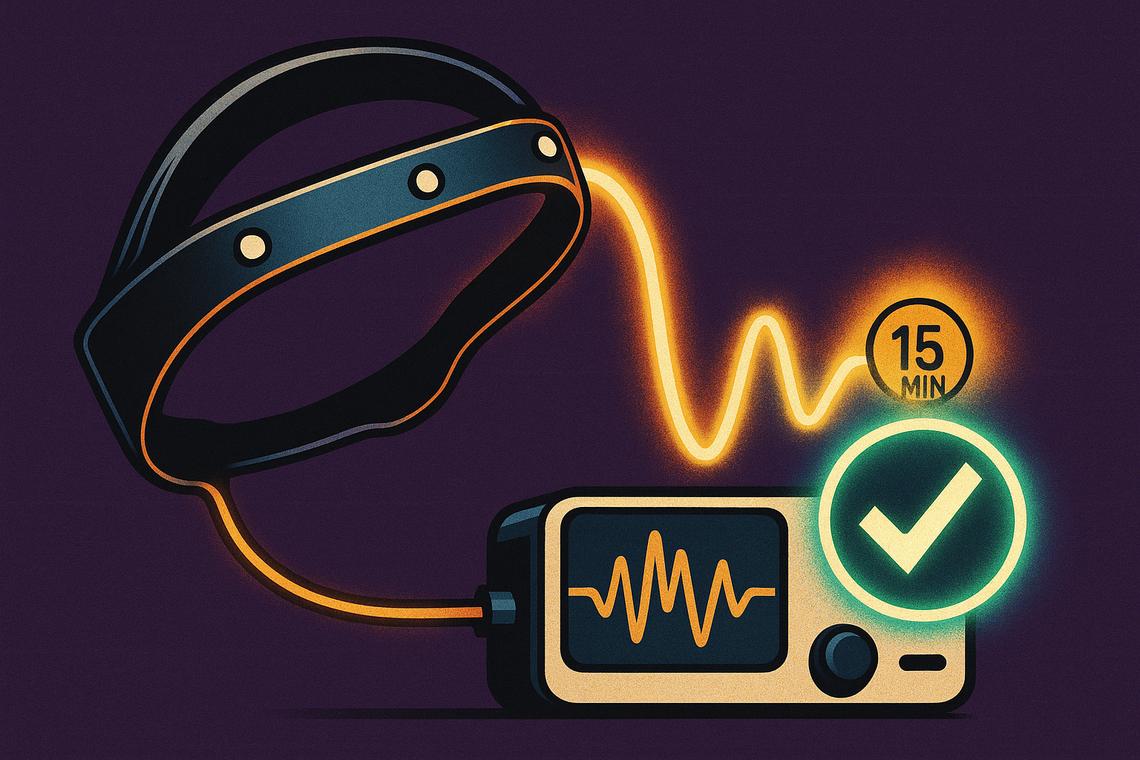
- Its system uses a lightweight EEG headset and tablet app to measure brain activity over roughly 15 minutes.
- The first product targets PTSD diagnosis and is set for FDA submission in early 2025, with a public rollout targeted for 2027.
- Co-founder Hagai Lalazar envisions the device being as cheap and widely distributed as a blood test across clinics and hospitals.
The FaceID Connection: Why This Founder’s Background Matters
Gidi Littwin spent years at Apple building the kind of AI systems that required enormous datasets to function. FaceID needed hundreds of thousands of subjects to train the models that let your phone recognize your face in the dark, at an angle, or behind glasses. When Littwin left Apple in 2020, he wasn’t walking away from that approach — he was looking for somewhere to apply it at higher stakes.
He found that in Hagai Lalazar, who cold-messaged him on LinkedIn after speaking to roughly 75 other candidates. Lalazar had been working on AI systems to study the brain without invasive procedures. What he needed was someone who understood how to build a commercial data operation at scale. Littwin was that person.
The parallel is striking. Just as FaceID required massive data collection pipelines to teach machines to recognize human faces, Hemispheric had to teach machines to recognize something far more complex: the electrical signature of a disordered brain. “There were massive data collection operations behind these projects and we knew we had to build something very similar at Hemispheric,” Littwin told WIRED.
Hemispheric’s AI-Powered Brain Diagnostic Technology
The foundation of Hemispheric’s platform is its dataset — and the scale of it is what separates this startup from most competitors in the space. Lalazar and Littwin collected what they describe as their “most prized possession”: a quarter of a million hours of brain activity data from 100,000 paid volunteers recruited across Asia, Tel Aviv, and Boston.
Training AI with 100,000 brain datasets
Participants weren’t just lying still in scanners. They performed a series of tasks that looked like games but were designed to activate specific regions of the brain. The resulting dataset gave the company something rare in neuroscience: a large, diverse, and richly labeled corpus of brain activity to train deep learning models on.
The analogy Hemispheric draws is to large language models. Just as an LLM deduces meaning by analyzing statistical patterns in text, Hemispheric’s frontier model infers brain function from patterns in electrical activity measured within the skull. When tested on subsets of individuals diagnosed with PTSD, schizophrenia, and depression, the model made accurate assessments of those individuals’ brain health. The company is also running a clinical study to test whether the model can diagnose — and even predict — Alzheimer’s.
How the system works: EEG headset and tablet app
The clinical interface is deliberately simple. A patient wears a lightweight EEG headset and interacts with an app on a tablet for around 15 minutes. During that time, the headset records the brain’s electrical activity. Hemispheric’s AI model then analyzes those signals to help clinicians make diagnoses, identify the most effective treatment approach, and track patient progress over time.
This is where the non-invasive cognitive diagnosis angle becomes genuinely significant. Currently, diagnosing depression, Parkinson’s, or Alzheimer’s relies heavily on subjective questionnaires and behavioral observations — tools that vary in reliability and are difficult to scale. A consistent, hardware-based signal that AI can interpret objectively represents a meaningful shift in how mental health conditions could be assessed.
Clinical Focus and Regulatory Milestones
Hemispheric’s first commercial target is PTSD — a condition that affects millions and remains notoriously difficult to diagnose consistently. The plan is to submit this product to the FDA for approval in early 2025, with a public rollout aimed at 2027 if that approval comes through.
Target disorders and initial product
Beyond PTSD, the platform has already shown promise across a range of conditions. The AI model has been tested against cases involving depression, schizophrenia, and Parkinson’s. The Alzheimer’s work is still in the clinical study phase, which is an important distinction — the company is not yet claiming a validated product in that area.
What the portfolio of target disorders reveals is a deliberate strategy: Hemispheric is positioning itself at the intersection of psychiatry and neurology, two fields that have historically lacked reliable biomarker-based diagnostic tools. That’s a wide gap, and filling even part of it would be medically and commercially significant.
FDA submission timeline and public rollout plans
The FDA pathway will be a defining moment for the company. Regulatory approval doesn’t just validate the science — it unlocks the clinical market in the United States and sets a precedent for approvals in other jurisdictions. The 2027 public rollout target reflects the realistic pace of the regulatory process rather than any lack of urgency on Hemispheric’s part.
Funding, Vision, and Market Position
The $52 million funding round drew in both American and Israeli venture capital firms, alongside individual investors. Among them is Howard Morgan, an early backer of Uber, whose involvement signals the kind of high-conviction, early-stage bet that typically comes when investors see a genuinely differentiated technical foundation.
Securing $52 million for development and expansion
The company plans to deploy the capital across several fronts: building government and healthcare partnerships, expanding its US team, advancing toward regulatory approval, and — critically — collecting brain data from millions more people to improve the model’s performance.
That last point matters more than it might appear. AI diagnostic models improve with data, and a larger, more diverse dataset reduces the risk of the model performing inconsistently across different populations. Scaling data collection is therefore not just a growth move — it’s a scientific one.
Vision for accessible brain diagnostics like blood tests
“The future that we envision is one where this is akin to a blood test,” Lalazar told WIRED. “The device is going to be very, very cheap; it will be able to be sold and distributed throughout mental health clinics, hospitals, and even psychologists’ offices.”
That vision is ambitious, but the logic is sound. Blood tests democratized physical health diagnostics by stripping out the need for specialist infrastructure. If a low-cost EEG device and a tablet app can reliably detect brain disorders in a 15-minute session, the potential reach is enormous — particularly in healthcare systems where access to neurologists or psychiatrists is limited.
Competitive landscape and strategic development of proprietary brain scanners
Hemispheric operates in a space that is getting more crowded. OpenAI and Anthropic are both expanding into healthcare, and AI-assisted diagnostic tools for conditions like lung cancer are already in clinical use across Europe. The competitive pressure is real.
Hemispheric’s strategic response is partly technological differentiation. The company is developing its own proprietary brain scanners, distinct from standard EEG devices. As Littwin put it: “These devices were never built for machine learning and definitely not deep learning.” The implication is that off-the-shelf EEG hardware imposes limits on the quality of data a deep learning model can work with — and that custom-built scanners could unlock meaningfully better diagnostics.
Whether proprietary hardware gives Hemispheric a durable edge will depend on how the science develops and whether the FDA clears their PTSD product on schedule. But the combination of a differentiated dataset, a founder with proven large-scale AI experience, and a clear regulatory pathway puts Hemispheric in a stronger position than most startups trying to bring AI brain diagnostics to market. The next milestone — that FDA submission — will tell the industry a great deal about whether the science holds under regulatory scrutiny.
FAQ
What type of brain disorders is Hemispheric’s AI model designed to diagnose?
Hemispheric’s AI model is designed to diagnose disorders including PTSD, depression, Parkinson’s, and schizophrenia, and the company is currently conducting a clinical study to evaluate whether it can also diagnose and predict Alzheimer’s disease.
How does Hemispheric collect brain data for its AI models?
The company collected brain activity data from 100,000 paid volunteers across Asia, Tel Aviv, and Boston. Participants wore a lightweight EEG headset and performed task-based activities designed to activate different parts of the brain, generating a quarter of a million hours of recorded brain activity.
What is the expected timeline for Hemispheric’s first FDA-approved diagnostic product?
Hemispheric plans to submit its first product — focused on PTSD diagnosis — to the FDA for approval in early 2025. If approved, the company aims to make the product publicly available in 2027.
How does Hemispheric plan to make brain diagnostics more accessible?
The company envisions deploying a low-cost EEG device widely across mental health clinics, hospitals, and psychologists’ offices, making brain diagnostics as routine and affordable as a standard blood test.
Article produced with the assistance of artificial intelligence and reviewed by the editorial team.






 English (US) ·