
 2 hours ago
16
2 hours ago
16
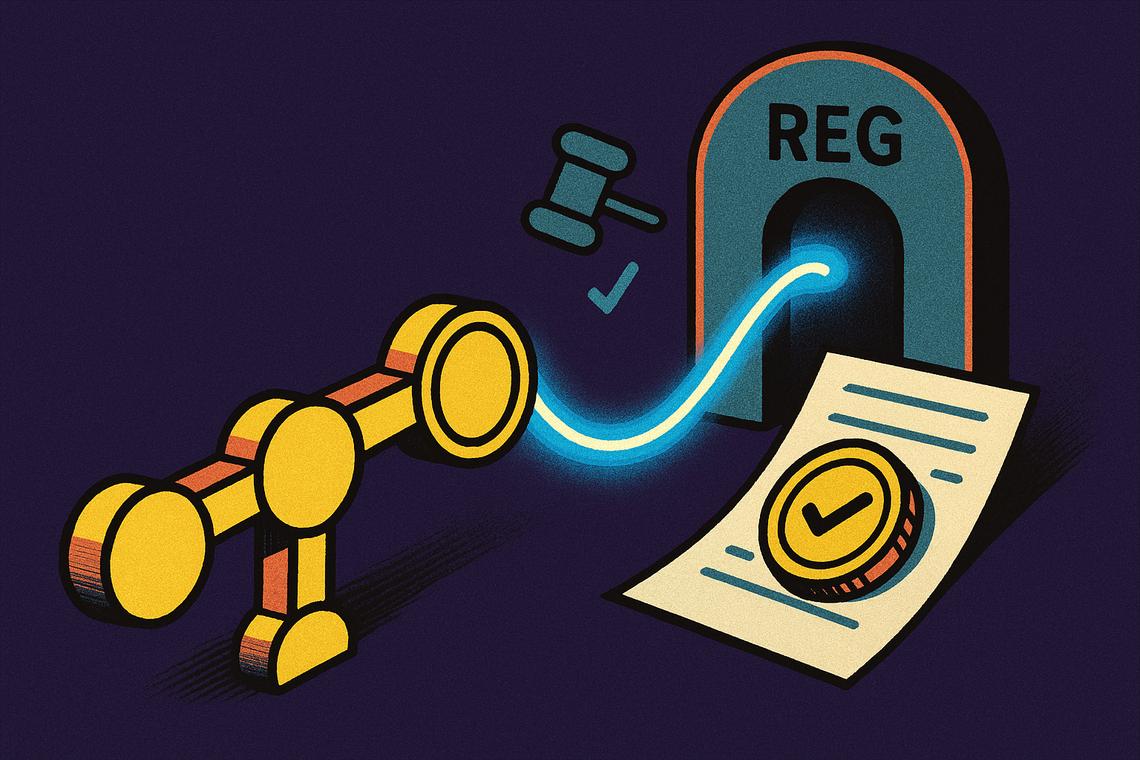
Wall Street and the blockchain world have been circling each other for years. Now, with Cantor Fitzgerald and Securitize announcing a collaboration to bring blockchain IPO tokenization directly into the issuance process, that courtship is starting to look like a serious commitment — and one that could reshape how public companies access capital markets.
Key takeaways
- Cantor Fitzgerald and Securitize are partnering to integrate blockchain-based tokenization directly into IPO and follow-on offering processes.
- Cantor brings equity capital markets and trading capabilities; Securitize provides the tokenization infrastructure for issuing and servicing securities.
- Tokens issued under this model represent actual issuer-sponsored securities — not wrappers, synthetic exposures, or special purpose vehicles.
- The initiative operates within existing regulatory and capital markets frameworks, not outside them.
- DTCC is separately advancing stock tokenization with partners including JPMorgan, Goldman Sachs, BlackRock, and Vanguard, signaling a broader industry shift.
Cantor Fitzgerald and Securitize Launch Blockchain-Based IPO Collaboration
The collaboration pairs two distinct capabilities. Cantor Fitzgerald, the established investment bank, contributes its equity capital markets expertise and trading infrastructure. Securitize, the cryptocurrency-focused broker-dealer trading under the ticker SECZ, brings the tokenization technology used to issue, distribute, and service tokenized securities.
Together, they aim to give public companies a path to raise capital and issue securities onchain — while still operating within the established frameworks of traditional public offerings.
Scope and Purpose of the Collaboration
This is not a pilot for tokenized funds or a play on secondary trading liquidity. The partnership extends blockchain infrastructure directly into IPOs and follow-on offerings, targeting the primary issuance moment itself. That distinction matters. Rather than retrofitting blockchain onto existing securities after they’ve been issued, the two firms are building it into the process from the start.
The practical implications are significant: improved operational efficiency and modernized ownership records are among the stated goals, with the broader ambition of normalizing digital securities as a standard feature of capital markets — not a novelty layer on top of them.
Tokenization as an Integral Part of Traditional IPO Processes
The model Cantor and Securitize are advancing has a specific technical and legal architecture. The token issued represents the actual security itself — not a wrapper around it, not a synthetic exposure, and not a special purpose vehicle. It is an issuer-sponsored security, meaning the company going public is directly behind the token, not a third party repackaging existing shares.
Issuer-Sponsored Security Model
This distinction carries real weight. Much of the early tokenization activity in capital markets involved wrapping existing assets in digital form — a process that added blockchain exposure but didn’t fundamentally change the underlying security or its issuance mechanics. The Cantor-Securitize approach moves upstream, embedding tokenization into the offering itself rather than treating it as an aftermarket add-on.
For issuers, that could mean cleaner settlement, more transparent ownership records, and a tighter link between the token and the legal rights it represents. For investors, it removes a layer of abstraction that has historically made tokenized securities harder to evaluate.
Integration into Issuance Rather Than Aftermarket
The decision to focus on issuance — rather than secondary trading — is a meaningful strategic choice. Secondary tokenization markets have struggled with liquidity and adoption. By anchoring the token to the IPO itself, the partnership sidesteps those challenges and gives tokenized securities a clean, institutional-grade entry point into the market.
Benefits and Industry Context of the Collaboration
The timing of this announcement is hard to ignore. This week, the Depository Trust & Clearing Corporation (DTCC) unveiled further plans to tokenize stocks alongside major partners including JPMorgan, Goldman Sachs, BlackRock, and Vanguard. The convergence of moves suggests the industry has shifted from experimentation to implementation.
Operational Efficiency and Modernized Ownership Records
Traditional IPO settlement involves layers of intermediaries, reconciliation processes, and ownership records that can take days to finalize. Onchain settlement compresses that timeline and creates a single, shared source of truth for ownership data. For capital markets infrastructure, that’s not a minor upgrade — it addresses friction points that have persisted for decades.
Alignment with Existing Capital Markets Frameworks
Crucially, neither Cantor nor Securitize is pitching this as a workaround for existing regulation. The collaboration is designed to work within established regulatory and capital markets frameworks — a posture that reflects lessons learned from earlier crypto-native attempts to disrupt financial infrastructure that ended up colliding with regulators rather than working alongside them.
Public companies won’t have to choose between traditional capital market access and blockchain’s operational advantages, according to Securitize’s Carlos Domingo. That framing — blockchain as additive rather than disruptive — is precisely the language that resonates with institutional audiences and regulators alike.
Executive Perspectives on Market Impact and Vision
Carlos Domingo, Co-Founder and CEO of Securitize, framed the partnership in terms of regulatory alignment and long-term market evolution. “This partnership brings together the capabilities required to support capital formation onchain within existing regulatory frameworks,” Domingo said. “It’s another step toward a future where digital securities become a standard part of how capital markets operate.”
The emphasis on regulatory alignment is strategic. Securitize has built its business around compliant tokenization infrastructure, and Domingo’s framing positions the collaboration as an extension of that approach — not a departure from it.
Pascal Bandelier, Co-CEO and Global Head of Equities at Cantor, took the framing a step further. “Tokenization is becoming part of mainstream capital markets,” Bandelier said, “and partnering with Securitize allows us to bring the rigor of traditional equity capital markets to onchain settlement and distribution. This gives our clients innovative new ways to raise and access capital as markets evolve.”
Bandelier’s language is notable. He’s not describing tokenization as an experiment or a future possibility — he’s describing it as something that is already happening. For a firm with Cantor Fitzgerald’s standing in equity markets, that’s a meaningful signal about where institutional finance is heading.
The real test, of course, will come with execution. How quickly the partnership produces live issuances, which companies opt in, and whether institutional investors embrace tokenized IPO securities on the same terms as traditional shares — those are the questions that will define whether this collaboration becomes a template for the industry or a well-intentioned proof of concept.
FAQ
What roles do Cantor Fitzgerald and Securitize play in their IPO tokenization collaboration?
Cantor Fitzgerald provides equity capital markets and trading capabilities, while Securitize supplies the tokenization infrastructure used to issue, distribute, and service tokenized securities.
How does this collaboration change the traditional IPO process?
It integrates tokenization directly into the IPO issuance process, enabling public companies to raise capital and issue securities onchain within traditional regulatory and capital market frameworks — rather than applying blockchain as an aftermarket addition.
What type of tokenized securities will be issued through this collaboration?
The tokens represent issuer-sponsored securities equivalent to the actual security itself — not wrappers, synthetic exposures, or special purpose vehicles.
What do executives say about the significance of this partnership?
Carlos Domingo of Securitize highlighted the collaboration’s support for capital formation within existing regulations and its role in making digital securities a standard part of capital markets. Pascal Bandelier of Cantor Fitzgerald emphasized that tokenization is already entering mainstream capital markets, and the partnership brings traditional equity market rigor to onchain settlement and distribution.
Article produced with the assistance of artificial intelligence and reviewed by the editorial team.







 English (US) ·