
 1 month ago
60
1 month ago
60
Europe’s crypto market is moving into a tougher, more structured phase, and MiCA tokenization Europe is becoming the frame through which many companies now have to rethink their business. What once looked like a wide-open field for crypto treasury companies and payments platforms is starting to narrow as regulation tightens and investors focus more closely on who generates yield, who has compliance in place, and who can operate across borders.
That shift is at the center of the case being made by Wojciech Kaszycki, chief strategy officer at BTCS SA and founder of Mobilum. His argument is straightforward: firms that merely hold digital assets may struggle to keep pace, while businesses that combine treasury exposure with operating infrastructure could move ahead.
It is a notable claim at a time when public companies are increasingly holding digital assets on their balance sheets. The text points to more than 150 and nearly 200 public companies with digital assets in treasury, collectively holding over $100 billion in crypto. However, scale alone is not the same as strategy, and that distinction is now becoming central to Europe’s next crypto chapter.
Why BTCS says the market will consolidate
BTCS SA is described as Europe’s first dedicated Digital Asset Treasury Company, a label that places it in a very specific corner of the market.
The company uses Bitcoin as an anchor treasury asset. But unlike a passive treasury model, its approach is built around what it calls an active strategy: generating yield through staking, validator operations, and tokenized Real-World Assets, or RWAs.
Bitcoin as an active treasury strategy
That structure matters because it changes what a crypto treasury company is trying to be. Instead of simply tracking the price of Bitcoin, the model aims to increase the productivity of treasury assets through operations tied to blockchain infrastructure.
Kaszycki’s broader point is that many public companies holding crypto may not have a durable operating thesis behind those positions. In the text, he argues that firms without real yield models may face consolidation, with passive holders more likely to be acquired, forced to pivot, or left behind.
This is one of the clearest reasons the story matters. If that view proves right, the next stage of the market will not be defined by who bought Bitcoin early, but by who built revenue-producing crypto infrastructure around it.
Yield, not passive holding
BTCS’s model centers on three yield sources specifically identified in the text:
- staking
- validator operations
- tokenized RWAs
That puts the company closer to a hybrid of treasury vehicle and blockchain infrastructure operator than a simple balance-sheet holder.
Just as importantly, the distinction helps explain why crypto treasury companies are getting fresh scrutiny. Investors comparing them with crypto ETFs are not only weighing asset exposure. They are also weighing whether management can turn digital assets into operating income. In that sense, the divide between passive exposure and active treasury execution is becoming more important.
How MiCA changes the rules for crypto businesses
The regulatory backdrop is now just as important as the treasury strategy. MiCA tokenization Europe is not only about making crypto more standardized; it is also reshaping which business models are easiest to scale across the European Union.
MiCA is described in the text as applying directly to crypto payments platforms like Mobilum under CASP licensing requirements. That is a major point for firms that started in on- and off-ramp services and now want to broaden into full crypto-financial infrastructure.
Mobilum began as a Bitcoin off-ramp and later expanded into fiat-to-crypto infrastructure serving exchanges, wallets, and DeFi protocols. Under the framework described here, that kind of payments and conversion activity falls squarely within regulated crypto services.
The July 2026 deadline
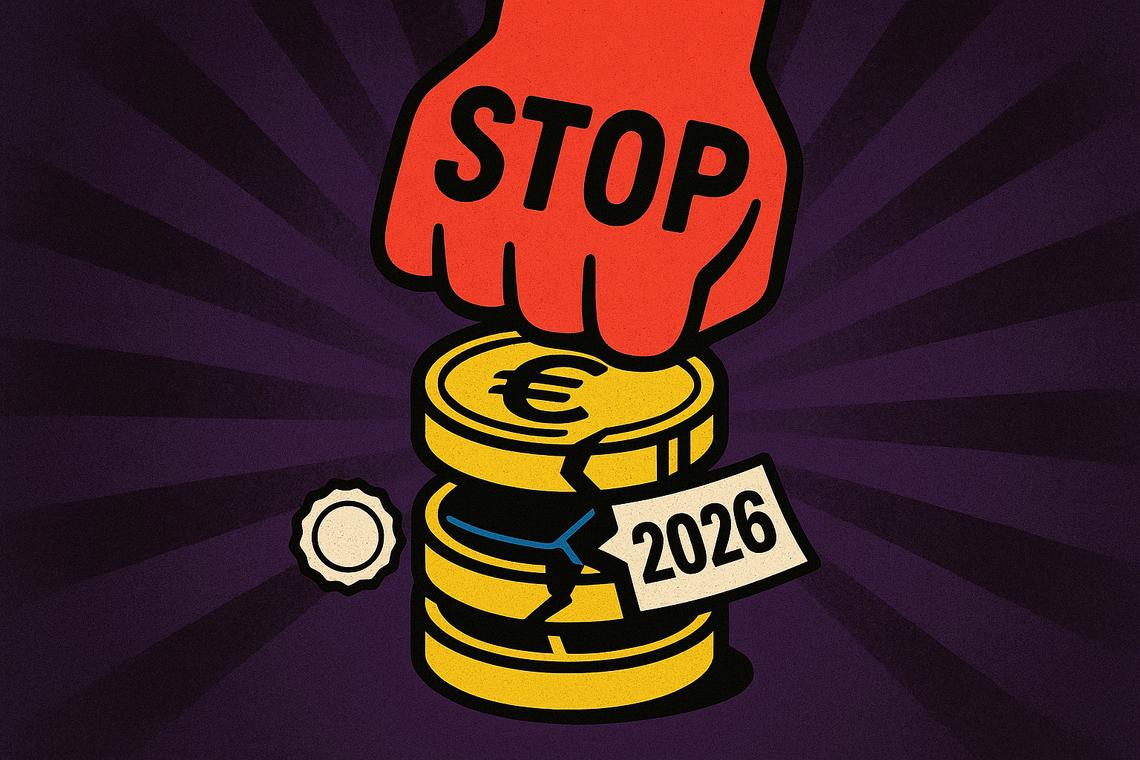
One date stands out: July 1, 2026.
The text says that deadline marks the end of an 18-month grandfathering transitional period for CASPs. For companies still relying on transition windows or partial national arrangements, that is the point where temporary flexibility runs out and the unified regime becomes much harder to sidestep.
That deadline matters because it compresses strategic decisions. Firms cannot wait indefinitely to decide where to license, how to structure operations, or which jurisdictions to prioritize.
Where MiCA applies and where it is still unclear
The text draws an important distinction between crypto payments businesses and treasury companies.
A crypto payments platform like Mobilum is described as clearly falling under CASP licensing rules. By contrast, a company that simply holds Bitcoin on its own balance sheet is presented as less directly regulated under MiCA, unless it begins offering third-party services such as custody, exchange, or staking-as-a-service.
That conditional boundary is likely to shape business design across the sector. Companies that want to stay as pure treasury vehicles may face one set of constraints. Those that want to earn revenue from services may face another, more demanding regulatory path.
How firms are adapting across the European Union
The text describes a market that is not waiting for perfect clarity. Companies are adapting in real time, even while implementation remains uneven across the bloc.
The biggest operational challenge, according to the analysis, is fragmentation across the European Union’s 27 member states. MiCA may be a single regulation, but the text says national authorities are still interpreting key requirements differently, including capital adequacy, substance rules, and fit-and-proper assessments.
That creates a strange reality: one rulebook on paper, but multiple versions of enforcement in practice.
For firms trying to scale, the response has been highly tactical. The text says companies are applying for licenses in multiple jurisdictions, building modular compliance stacks, and keeping close dialogue with regulators.
In that sense, MiCA tokenization Europe has become more than a policy phrase. It is now an operating challenge. Compliance architecture, licensing strategy, and legal interpretation are becoming competitive tools, not just back-office functions.
The grey areas still shaping strategy
Not everything is settled. The text highlights continuing uncertainty around DeFi, NFT classification, and the way staking services are categorized.
It also notes uncertainty around the prudential treatment of Bitcoin as a reserve asset for treasury companies. That kind of ambiguity can have outsized effects, especially for smaller firms that do not have the budget to overbuild compliance or pursue several licenses at once.
In practice, that could favor larger and better-capitalized players. It also helps explain why consolidation is being discussed so openly. Regulation does not just filter out weak operators; it can also raise the minimum scale needed to survive.
Tokenization’s next phase in Europe
The bigger story here is not just about compliance. It is about where European crypto infrastructure is heading next.
The text presents stablecoins and CBDCs as parallel paths for tokenization and settlement. Stablecoins are described as market-driven, fast, composable, and already functioning at scale, while CBDCs are framed as more relevant for sovereign-backed and interbank settlement.
That split suggests Europe may not be choosing one system over the other. Instead, it may be building a layered financial architecture in which stablecoins handle retail and commercial flows while wholesale CBDCs support institutional settlement.
For crypto firms, that has direct implications. Infrastructure that can connect payments, tokenized assets, and regulated on-chain settlement may become far more valuable than products built around isolated crypto use cases.
Why stablecoin infrastructure is getting more attention
The writing angle behind this shift is clear: tighter rules are not just restricting crypto activity, they are channeling it into more institutional-grade formats.
That is why stablecoin infrastructure, tokenization, and what Kaszycki describes as Bitcoin banking are being grouped together. The idea is not simply to make crypto easier to buy or sell. It is to make digital assets usable inside more formal financial rails.
This is where the story becomes broader than any one company. If Europe’s next crypto winners are those combining regulatory readiness with revenue-generating infrastructure, then tokenization may increasingly belong to firms that look less like speculative startups and more like regulated financial utilities.
The next 18 months, as described in the text, could decide who those players are. And with the July 1, 2026 MiCA deadline approaching, the pressure is no longer theoretical. It is becoming structural.







 English (US) ·