
 1 month ago
34
1 month ago
34
- OpenSea now supports trading across 26 blockchain networks with more features on the way
- A new mobile app aims to simplify crypto onboarding using Apple Pay and instant wallets
- The company wants to evolve from an NFT marketplace into a full onchain trading platform
OpenSea is officially trying to move beyond being known as “just” an NFT marketplace, and honestly, the shift has been coming for a while now. Speaking with CoinDesk during Consensus, OpenSea CMO Adam Hollander explained that the company’s long-term goal is becoming a universal gateway for the entire onchain economy rather than focusing only on NFTs.
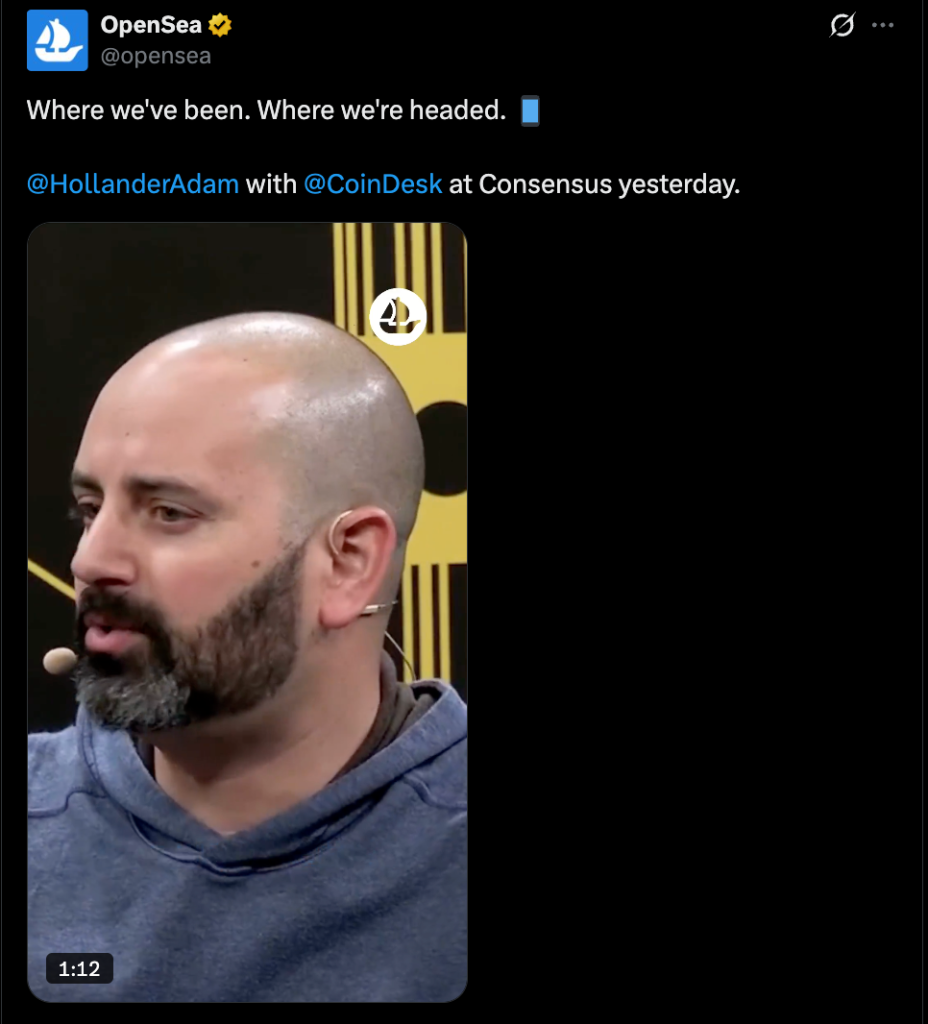
The platform already supports trading across 26 different blockchain networks, allowing users to buy and sell not only NFTs but also major cryptocurrencies and meme coins directly within the same ecosystem. According to Hollander, perpetual futures trading is also on the roadmap alongside a redesigned mobile application aimed at mainstream users.
OpenSea Wants To Simplify Crypto Completely
A huge part of the company’s strategy now revolves around fixing crypto’s notoriously painful onboarding experience. Hollander openly acknowledged what most people outside crypto already know — seed phrases, wallet setup, and chain switching remain confusing enough to scare away millions of potential users almost immediately.
OpenSea’s upcoming mobile app is designed to remove most of that friction entirely. The company says users will be able to install the app, automatically receive a provisioned wallet, use Apple Pay instantly, and begin buying digital assets within seconds.
The idea is to create something closer to a traditional consumer app experience while still preserving non-custodial ownership underneath the surface. That balance has always been one of crypto’s hardest problems to solve cleanly.
The Goal Is Becoming A Full Onchain Hub
Rather than positioning itself only around NFTs moving forward, OpenSea increasingly wants users to think of the platform as a central home for all onchain activity. Hollander described the vision as a single interface where users can manage portfolios, trade across multiple chains, hold different asset types, and access digital culture broadly without worrying about backend complexity.
That includes everything from blue-chip crypto assets to meme coins, collectibles, and eventually derivatives trading. In practice, OpenSea appears to be moving closer toward becoming a kind of crypto super app rather than remaining narrowly focused on collectibles.
And honestly, the timing makes sense. NFT trading volumes are still far below their peak cycle highs, while users increasingly expect platforms to offer broader functionality across crypto markets.
Competition Is Getting Brutal
Of course, OpenSea’s expansion also throws the company directly into competition with exchanges, trading apps, wallets, and multi-chain infrastructure providers all at once. The broader crypto market has become intensely competitive, especially as onboarding and user experience improve across rival platforms.
Adding perpetual futures and cross-chain trading capabilities may help OpenSea stay relevant beyond NFT cycles, but execution will matter far more than the vision itself. Plenty of crypto companies have promised simplified onboarding before and still ended up confusing normal users almost immediately.
Still, OpenSea already has one major advantage: brand recognition. Even people barely familiar with crypto usually know the company’s name because of its dominance during the NFT boom years.
OpenSea Is Betting On The “Onchain Everything” Future
At its core, the company’s new direction reflects a broader shift happening across crypto right now. More projects are starting to position blockchain technology less as a niche trading ecosystem and more as the infrastructure layer for broader digital ownership online.
Hollander framed OpenSea’s future around the concept of non-custodial ownership for anything existing onchain. That’s actually a pretty powerful idea if the industry eventually moves toward tokenized assets, digital identity, gaming items, financial products, and social ownership all living within blockchain ecosystems simultaneously.
Whether OpenSea successfully becomes that central gateway is another question entirely. But the company clearly no longer wants to be viewed as simply the place people bought JPEGs during the last bull market.
Disclaimer: BlockNews provides independent reporting on crypto, blockchain, and digital finance. All content is for informational purposes only and does not constitute financial advice. Readers should do their own research before making investment decisions. Some articles may use AI tools to assist in drafting, but every piece is reviewed and edited by our editorial team of experienced crypto writers and analysts before publication.






 English (US) ·