
 2 months ago
60
2 months ago
60
- The Senate Banking Committee released a revised 309-page CLARITY Act draft ahead of a May 14 markup vote
- The bill would formally split crypto oversight between the SEC and CFTC for the first time
- Stablecoin yield compromises and DeFi protections helped revive momentum for the legislation
The Digital Asset Market Clarity Act, better known as the CLARITY Act, just moved one step closer toward becoming actual US law after the Senate Banking Committee released a revised 309-page draft this week. The updated version expands on January’s earlier proposal and sets up a crucial markup vote scheduled for May 14.
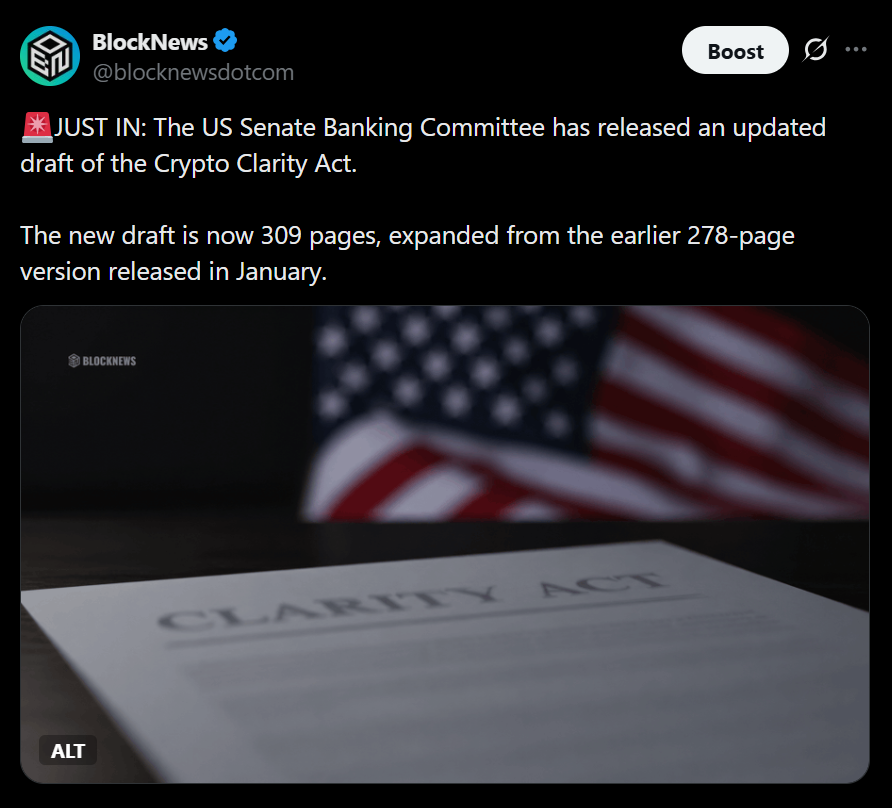
For the crypto industry, this is easily one of the most important regulatory developments the United States has seen in years. If passed, the bill would finally establish a formal federal market structure framework for digital assets after nearly a decade of legal uncertainty and enforcement battles.
The Bill Splits SEC And CFTC Authority
At the center of the legislation is a long-awaited attempt to clearly divide oversight responsibilities between the SEC and the CFTC. Under the proposed framework, the SEC would oversee new token sales and initial offerings, while the CFTC would regulate secondary market trading once tokens begin trading on exchanges.
That distinction matters because crypto companies have spent years arguing that unclear jurisdiction between both agencies created a confusing “regulation-by-enforcement” environment that made long-term planning almost impossible.
The CLARITY Act is designed to replace that uncertainty with an actual legal framework businesses can operate around instead of guessing how regulators might interpret rules retroactively.
Stablecoin Yield Rules Helped Break The Deadlock
One of the biggest updates in the revised draft involves a stablecoin yield compromise negotiated by Senators Thom Tillis and Angela Alsobrooks. The agreement blocks stablecoin products from offering yield structures that resemble traditional bank deposit interest while still allowing certain activity-based rewards tied to legitimate platform use.
That compromise appears to have helped unlock broader support for the bill after months of stalled negotiations. Coinbase, Circle, and more than 100 crypto companies publicly backed the revised framework in a joint letter urging lawmakers to move the legislation forward.
The updated draft also introduces cybersecurity and compliance requirements for centralized firms interacting with DeFi protocols while adding explicit protections for open-source developers and peer-to-peer transactions. Those carve-outs became major priorities after earlier drafts raised fears that individual developers could face regulatory liability simply for publishing code.
Momentum Around Crypto Regulation Is Growing
The markup arrives during what many analysts are calling one of the most important weeks yet for US crypto policy. Alongside the Senate vote, the House Ways and Means Committee is reportedly holding bipartisan discussions around crypto tax reform as lawmakers increasingly shift toward building a broader digital asset framework simultaneously.
Earlier concerns surrounding Congressional Budget Office scoring requirements also appear to have been resolved ahead of the May 14 vote, removing another obstacle that previously threatened delays.
The Industry Finally Sees A Path Forward
If the Senate Banking Committee advances the bill this week, the next step would involve a full Senate floor vote before eventual reconciliation with the House version passed back in 2025.
Analysts tracking the process believe the legislation now has a realistic path toward becoming law before the end of 2026, although amendments and additional negotiations still remain likely.
For the crypto industry, even reaching this stage represents a major shift. After years of uncertainty, the US government is finally moving toward building a comprehensive regulatory structure instead of relying almost entirely on enforcement actions and courtroom battles.
Whether the final version fully satisfies the industry is another question entirely. But for now, the CLARITY Act appears closer to reality than at any point before.
Disclaimer: BlockNews provides independent reporting on crypto, blockchain, and digital finance. All content is for informational purposes only and does not constitute financial advice. Readers should do their own research before making investment decisions. Some articles may use AI tools to assist in drafting, but every piece is reviewed and edited by our editorial team of experienced crypto writers and analysts before publication.









 English (US) ·