
 1 hour ago
17
1 hour ago
17
The US military has begun examining options for a potential air assault on Cuba, with planning centered around the Army’s 101st Airborne Division, according to a CBS report. No final decisions have been made by President Trump or the Pentagon, but the mere existence of these contingency discussions adds another layer of geopolitical risk to a year that already has investors on edge.
What’s happening on the ground
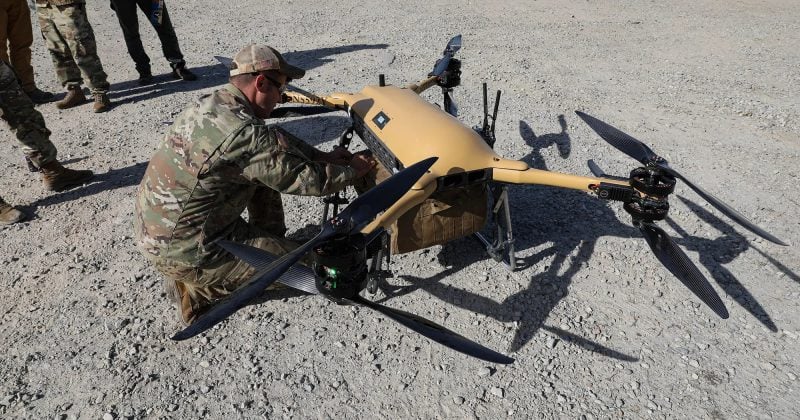
The planning reportedly stems from intelligence indicating Cuba has acquired over 300 military drones from Russia and Iran. Those numbers have raised alarms about potential threats to US interests in the Caribbean, including the naval station at Guantanamo Bay.
Since February 2026, the US has ramped up intelligence-gathering flights near Cuba’s coastline. The aircraft involved, P-8A Poseidons and MQ-4C Tritons, are the kind of surveillance platforms you deploy when you’re building a serious operational picture.
These discussions follow US military operations in Venezuela earlier this year. President Trump has made recent public statements regarding Cuba, though the contingency planning is described as early-stage and routine rather than an active military undertaking.
What investors should actually watch
The most important signal right now is whether this stays in the contingency-planning phase or moves toward active preparation. There’s a meaningful difference between military planners sketching options on a whiteboard and the 101st Airborne Division actually staging equipment.
For crypto-specific positioning, the historical playbook suggests watching Bitcoin’s correlation with gold during periods of military escalation. When Bitcoin trades as “digital gold,” geopolitical risk tends to be bullish. When it trades as a risk-on tech proxy, the same headlines can be bearish.
Stablecoin flows are another tell. During past geopolitical shocks, capital has tended to rotate from volatile crypto assets into USDT and USDC as traders move to the sidelines without fully exiting the ecosystem. A spike in stablecoin market cap without a corresponding rise in Bitcoin or Ethereum prices would signal that smart money is bracing for impact.
Traders should also keep an eye on the dollar. Military escalation in the Western Hemisphere could strengthen the dollar through safe-haven flows, which historically creates headwinds for Bitcoin. Alternatively, if markets interpret the escalation as fiscally irresponsible, the dollar could weaken, providing a tailwind.
Disclosure: This article was edited by Editorial Team. For more information on how we create and review content, see our Editorial Policy.







 English (US) ·